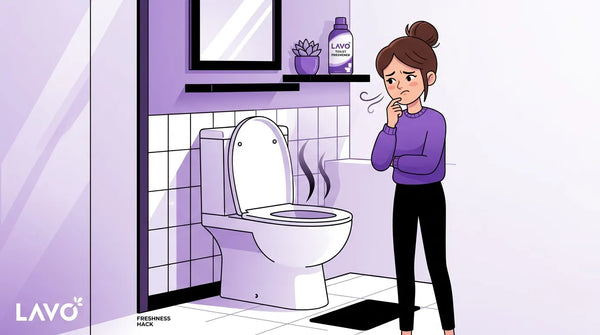

Walk into any "natural cleaning" forum and you'll find the same argument on repeat: vinegar or citric acid, which one actually gets the toilet clean? Both are pantry-shelf acids. Both show up in a thousand DIY cleaning hacks. And both get lumped together as "the non-toxic option" by people who've never actually compared them side by side.
They are not the same acid, and they don't behave the same way in a toilet bowl. With summer bringing more guests, more usage, and more hard-water buildup into bathrooms, it's worth settling this one with actual chemistry instead of pantry folklore.
The Acid Strength Difference Nobody Mentions
Vinegar is a dilute solution of acetic acid, typically around 5% concentration, with a pKa of roughly 4.76. Citric acid, the acid naturally found in citrus fruit, has a pKa of about 3.13 for its first proton — and unlike acetic acid, it's triprotic, meaning it can donate three hydrogen ions instead of one.
In plain terms: citric acid is a meaningfully stronger acid than vinegar, and it has more chemical "ammunition" per molecule to react with mineral deposits. That's not a marketing claim, it's basic acid-base chemistry. It's part of why we already broke down how citric acid stacks up against a much harsher option in our citric acid vs. bleach comparison — but bleach was never the acid's real competition. Vinegar was.
What Actually Dissolves Limescale Faster
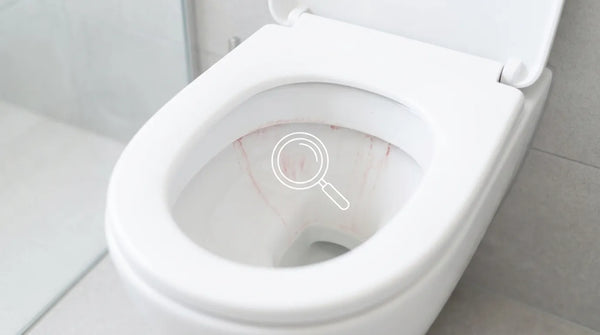
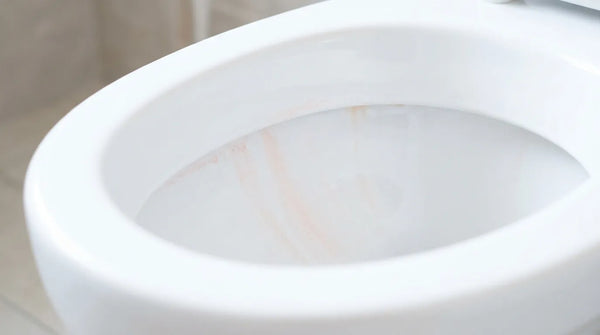
Toilet rings and that chalky white crust around the waterline are mostly calcium carbonate and magnesium deposits left behind by hard water. Dissolving them requires an acid that can both lower the pH enough to break the mineral bonds and chelate the freed calcium ions so they don't just redeposit somewhere else.
This is where citric acid pulls ahead. Its triprotic structure lets it bind calcium ions in a stable ring structure (a chelate), effectively locking them into the solution and flushing them away. Vinegar's acetic acid does dissolve some scale given enough contact time, but it's a weaker acid with only a single reactive site — so on stubborn, months-old buildup, it tends to need more time, more product, and more scrubbing to get comparable results. If you're dealing with genuinely hard water, our deep dive on what actually dissolves limescale covers the mineral chemistry in more detail.
The Contact Time Problem
Both acids work better the longer they sit undisturbed on a stain, which is exactly why pouring vinegar in and flushing five minutes later usually disappoints people. Citric acid's higher reactivity means it starts breaking down mineral deposits faster within that same window, which matters a lot when most of us aren't willing to let a toilet marinate overnight before every use.
The Smell Test
This is the part vinegar fans don't love to hear: straight vinegar has a sharp, sour odor that lingers in a small bathroom for a while after cleaning, especially in warmer summer months when smells travel faster in the air. Citric acid, by contrast, is essentially odorless in its solid or dissolved form, sometimes even carrying a faint, pleasant citrus note depending on the formulation. If your household includes anyone sensitive to strong smells — or you just don't want your bathroom smelling like a salad dressing spill — that's a real, practical difference, not a minor one.
Safety for Fixtures, Pipes, and Septic Systems
Neither acid is corrosive to porcelain, chrome, or most modern toilet hardware when used as directed, which is one reason both have solid reputations as "safe" cleaners compared to harsher chemical options. Both are also generally considered septic-safe in normal household quantities, since they're biodegradable and don't disrupt the bacterial balance a septic tank depends on the way some synthetic cleaners can.
Where they diverge again is concentration control. Vinegar's acid content is fixed and dilute by nature — you're stuck at roughly 5% acetic acid unless you seek out specialty "cleaning vinegar," which still tops out around 6%. Citric acid, sold as a crystalline powder or formulated into a pod, lets you control concentration more precisely, which is part of why it's become the base ingredient in most modern citric acid toilet cleaners, whether people mix it themselves or use a pre-measured pod.
Cost and Convenience: The Part Nobody Chemistry-Splains
Vinegar wins on pure sticker price at the grocery store. There's no arguing that a gallon jug is cheap. But cost-per-clean tells a different story once you factor in how much more vinegar you typically need, and how much scrubbing time it costs you to get the same result citric acid delivers with less effort.
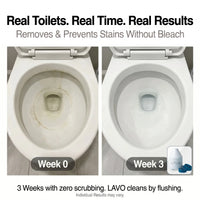
This is really where the two options split into different lifestyles. Vinegar is the "I have five extra minutes and a scrub brush" option. Citric acid — especially in a pre-measured pod format like LAVO's — is built for people who want to drop it in, let the chemistry do the work, and walk away. You're not measuring, you're not diluting, and you're not stuck smelling like a pickle jar for the rest of the afternoon.
So Which One Should You Actually Use?
If you've got light, everyday buildup and don't mind the smell or the extra scrub time, vinegar is a perfectly reasonable low-cost option. But if you're dealing with real hard-water staining, want faster results, or just don't want your bathroom smelling like a science experiment, citric acid is the stronger acid for the job — literally and practically.
Vinegar isn't a myth, and it isn't useless. It's just outmatched by an acid that's better structured for the specific job of breaking down mineral deposits in a toilet bowl. The chemistry isn't close, even if the marketing around "natural cleaners" tends to lump them together as interchangeable.
The Bottom Line
Both are legitimate steps up from harsh chemical cleaners. But between the two, citric acid is doing more work, faster, with less smell, and less elbow grease — which is exactly why it's become the acid of choice in modern natural toilet cleaning pods rather than vinegar.