
Quick Answer: Bleach disinfects and whitens — but it doesn't dissolve limescale. Citric acid is a weak organic acid that chemically reacts with calcium deposits and breaks them down. For hard water rings and mineral buildup, citric acid is genuinely more effective. For killing bacteria and germs, bleach has an edge. Most people need the limescale solution more than the disinfection.
What Bleach Actually Does (And What It Doesn't)
Bleach (sodium hypochlorite) is a powerful disinfectant and oxidizing agent. It kills bacteria, viruses, and mold. It also bleaches color out of surfaces, which is why it makes your toilet bowl look white after you use it.
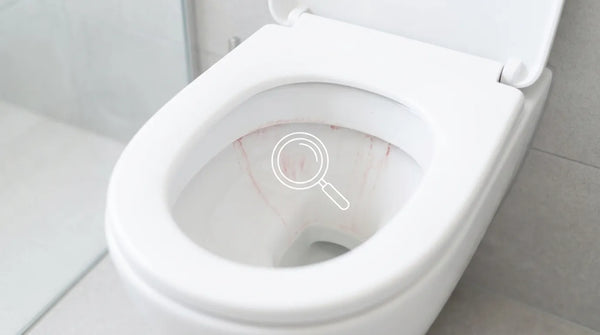
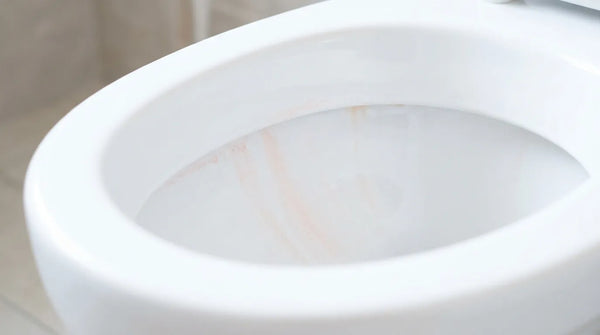
What bleach does not do is dissolve minerals. Calcium carbonate, the primary component of limescale and toilet rings, is not destroyed by bleach chemistry. The visible ring gets lighter or disappears because the pigmented organic layer on top is bleached away. The mineral deposit itself stays bonded to the porcelain surface.
This is why the ring comes back within days of a bleach cleaning. You haven't touched the underlying problem.
There's also a secondary issue with bleach that most people don't know about: sodium hypochlorite is corrosive to rubber over time. The rubber flapper valve, the fill valve gaskets, the washers inside your toilet tank — all of these degrade faster with regular bleach exposure. Many plumbers specifically advise against in-tank bleach tablets for this reason.
What Citric Acid Actually Does (The Chemistry)
Citric acid is an organic acid found naturally in lemons and other citrus fruits. It's one of the most widely used food-safe acids in the world. In cleaning applications, its power comes from a specific chemical reaction.
Calcium carbonate (limescale) is an alkaline mineral compound. When an acid contacts an alkaline compound, a neutralization reaction occurs. Citric acid reacts with calcium carbonate, producing calcium citrate (water-soluble), carbon dioxide (bubbles off), and water. The mineral deposit doesn't just lose its color — it breaks apart and dissolves. This is why citric acid is the active ingredient in professional descalers, kettle cleaning tablets, and dishwasher rinse aid.
Applied to toilet cleaning: when citric acid is present in your bowl water continuously, calcium minerals from your hard water can't successfully bond to the porcelain surface. They're continually being dissolved as they attempt to deposit. The ring never forms in the first place.
LAVO's Approach: Continuous Citric Acid Chemistry
The most effective way to use citric acid for toilet cleaning isn't to pour it in periodically — it's to keep a steady, low-level concentration in your tank water at all times. That's exactly what a citric acid tank pod does.
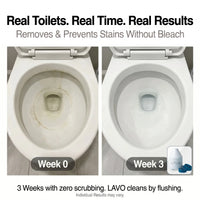
LAVO uses a small reusable pod that sits inside your toilet tank. A citric acid tab inside the pod dissolves slowly over 30 days, releasing a controlled amount into the water with each flush. Your bowl water always contains enough citric acid to prevent mineral adhesion — without ever needing to scrub.
One tab lasts approximately 250 flushes. The pod housing is reusable indefinitely. The ongoing cost is just the replacement tabs.
Importantly, this citric acid concentration is also safe for your rubber tank components (no corrosion), septic systems (citric acid is fully biodegradable and doesn't kill beneficial bacteria), and for pets and children. The dilution level in bowl water is comparable to very mild lemon juice.
Head-to-Head: Citric Acid vs. Bleach
|
Factor |
Citric Acid |
Bleach |
|
Dissolves limescale |
✅ Yes — chemical reaction |
❌ No — bleaches color only |
|
Disinfects |
Mild antibacterial effect |
✅ Strong disinfection |
|
Safe for rubber seals |
✅ Yes |
❌ Degrades over time |
|
Safe for pets/kids |
✅ Yes (food-safe acid) |
❌ Chlorine warning required |
|
Septic-safe |
✅ Yes — biodegradable |
❌ Kills beneficial bacteria |
|
Chlorine off-gassing |
None |
✅ Every flush releases chlorine |
|
Continuous prevention |
✅ Works with every flush |
❌ Reactive only |
|
Eco-impact |
Minimal |
Significant |
For most households, the relevant daily problem is limescale and mineral rings — not bacterial contamination. For that problem, citric acid wins unambiguously.
When Bleach Still Makes Sense
Bleach isn't without merit. If someone in your household has an infectious illness, a diluted bleach solution is genuinely better at sanitizing surfaces than citric acid. For deep-cleaning a visibly contaminated toilet — old rental properties, illness recovery, post-renovation cleanup — bleach disinfection is appropriate.
The mistake is using bleach as your routine toilet cleaner when the actual problem you're dealing with is mineral buildup. Most of the time, that's what the ring is. And for that, you need acid, not bleach.
Frequently Asked Questions
Is citric acid strong enough to clean a toilet?
For dissolving limescale and mineral rings, absolutely. For killing bacteria at a clinical level, it's a mild antibacterial at best. If your primary goal is removing the ring and keeping it away, citric acid is the correct chemistry. If you need surgical-level disinfection, use bleach occasionally alongside citric acid maintenance.
Can I mix citric acid and bleach?
Never mix citric acid with bleach. The combination releases chlorine gas. These are two separate products for separate applications — never combine them.
Does citric acid damage toilet porcelain?
No. Citric acid is pH-safe for porcelain, chrome, rubber, and plastic components. It's the gentlest effective descaling agent available. Professional descaling products across many industries use citric acid for exactly this reason.
How much citric acid do I need in my toilet tank?
You don't need a lot. The controlled-release design of tank pods like LAVO delivers a low, consistent concentration — enough to prevent mineral adhesion without being aggressive on any components.
Why do bleach tablet manufacturers warn against using their product in toilet tanks?
Many do, if you read the fine print. The warning is about rubber seal degradation. Long-term chlorine exposure hardens and cracks rubber components, eventually causing the toilet to run constantly. This is a real plumbing issue that bleach tablets silently cause over months.
Will citric acid hurt my septic system?
No. Citric acid is fully biodegradable and breaks down naturally. It doesn't kill the beneficial bacteria that septic systems depend on — unlike bleach, which is actively harmful to septic biology.
The bottom line: for keeping your toilet clean day-to-day, citric acid is a more targeted, safer, and more effective solution than bleach. See more about a citric acid tank system here with a 30-day risk-free trial.