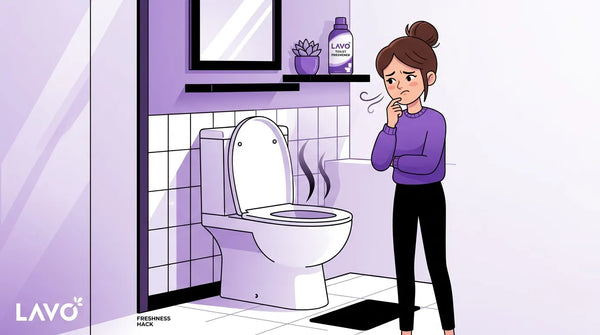

Natural toilet cleaners are everywhere right now.
Some promise a safer home.
Some promise less harsh chemicals.
Some promise they work “just as well” as anything traditional.
But do they actually work?
Yes, some of them do.
The catch is that “natural” by itself means almost nothing. What matters is the chemistry. If the ingredient matches the problem, natural toilet cleaning can work extremely well. If it does not, you end up with a nice-smelling product that does very little.
That is where most people get disappointed.
Quick answer
Natural toilet cleaners can work.
But they do not all work for the same jobs.
Here is the short version:
-
Citric acid works very well for mineral rings and hard water buildup
-
Vinegar works reasonably well for light descaling, but is weaker than people think
-
Baking soda is useful for deodorizing, but poor for limescale
-
Enzyme cleaners are good for odor and organic residue, but not mineral deposits
-
Bleach is still stronger for disinfection, but not for dissolving hard water scale
So if your main problem is the ring in the bowl, the best natural option is usually citric acid.
How we judged each natural cleaner
To keep this honest, the real question is not “Is it natural?”
The real question is:
What problem are you trying to solve?
A toilet cleaner can be good at one job and poor at another.
That is why we judged each option based on what people actually deal with in real bathrooms:
-
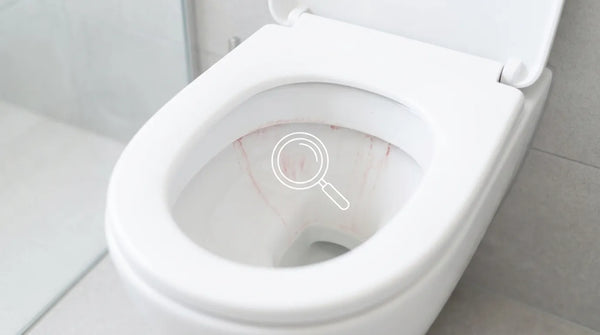
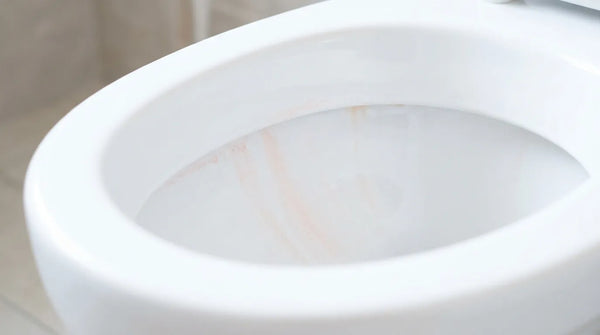
Hard water rings
-
Limescale at the waterline
-
Toilet odor
-
Pet-safe and septic-safe use
-
Ease of use in normal life
That matters because most households are not fighting “everything.”
They are fighting one or two specific recurring problems.
Why natural cleaners sometimes work better than expected
A lot of people hear “natural cleaner” and assume weak. That is not always true.
If the cleaner uses the right acid chemistry, it can be a much better choice than a stronger-smelling product with the wrong chemistry.
This is especially true for toilet bowls, because a lot of the ugliness people are fighting is not just dirt.
It is:
-
Mineral buildup
-
Limescale
-
Hard water residue
-
Deposits that keep catching new staining
That is why a natural acid can outperform a more aggressive-looking cleaner if the problem is scale.
Vinegar: useful, but limited
Vinegar is one of the most common natural toilet cleaning options, and for good reason.
It can help with:
-
Light limescale
-
Mild hard water residue
-
Occasional manual descaling
-
People who want a simple pantry-based cleaner
If you pour vinegar into the bowl and let it sit, it can soften mineral buildup over time.
That part is real.
Where vinegar works well
Vinegar makes the most sense when:
-
The buildup is still light
-
You are doing a one-time manual cleaning
-
You do not mind repeat treatments
-
You want a low-cost natural option
Where vinegar falls short
Vinegar is not a perfect answer.
Its weak points are:
-
It is usually too mild for severe buildup
-
It does not provide continuous treatment
-
It evaporates and washes away quickly
-
It is not a strong disinfectant
So yes, vinegar works.
But it works best as an occasional cleaner, not as a long-term automatic system.
Baking soda: the most overhyped option
Baking soda gets recommended for almost everything. For toilet cleaning, that advice is often overstated.
Baking soda can help with:
-
Mild deodorizing
-
Light surface scrubbing
-
General household cleaning tasks
But for toilet rings and limescale, it is not the answer.
Why it disappoints
If the problem is mineral buildup, baking soda does not do much because it is not built for dissolving mineral deposits.
That is why people often try it, scrub for a while, and then wonder why the ring still comes back.
What about baking soda and vinegar together?
This is the part that sounds impressive but usually delivers less than people expect.
When baking soda and vinegar fizz together, it looks active.
But most of that visible action is just a reaction between the two ingredients themselves.
In practice, that combination is often less useful than simply using the acidic ingredient alone for limescale.
So if your goal is the toilet ring, the famous fizz is more satisfying than effective.
Citric acid: the natural option that actually stands out
This is where natural toilet cleaning becomes much more convincing.
Citric acid is the option that makes the most sense for the problem most households actually have:
-
Hard water rings
-
Limescale
-
Mineral buildup
-
A toilet that never stays clean for long
Why citric acid works better
Citric acid is strong where natural toilet cleaning needs to be strong.
It is especially useful because it:
-
Targets mineral buildup
-
Makes more sense for recurring waterline rings
-
Works well in ongoing maintenance systems
-
Is easier to build into a repeatable routine
-
Fits homes that want less scrubbing, not more
If someone tells you natural toilet cleaners do not work, they are often thinking of weak DIY routines, not a properly designed citric-acid system.
Why format matters too
This part is important.
Even a good ingredient works better when the delivery system makes sense.
That is why citric acid is most useful not just as a one-time powder or soak, but as an ongoing in-tank maintenance system.
That gives you a practical benefit most DIY solutions cannot:
-
Continuous treatment
-
Less buildup over time
-
Less need for rescue scrubbing
-
A better fit for hard water homes
For toilet limescale specifically, this is where natural cleaning becomes not just “good enough,” but genuinely smart.
Enzyme cleaners: great for odor, weak for scale
Enzyme cleaners are another natural category worth understanding.
They are useful for:
-
Breaking down organic residue
-
Tackling odor at the source
-
Supporting septic-friendly cleaning
-
Homes that care more about smell than hard water scale
If your problem is toilet odor or organic buildup, enzyme cleaners can be a strong option.
Which natural toilet cleaner is best for each problem?
Here is the simple version.
Best for hard water rings
-
Citric acid
Best for light manual descaling
-
Vinegar
Best for odor and organic residue
-
Enzyme cleaners
Best for deodorizing only
-
Baking soda
Best overall natural option for most households
-
Citric acid
Why does citric acid win overall?
Because the most common recurring toilet problem is not just smell.
It is the ring that keeps coming back.
And that is where citric acid is the most relevant.
Are natural toilet cleaners as effective as bleach?
It depends on the job. If you mean disinfection, bleach is stronger.
If you mean dissolving toilet limescale, bleach is usually the wrong tool, and citric acid is often more useful.
That is why this debate gets confusing.
People compare products as if all cleaners are doing the same job. They are not.
A product can be weaker at killing germs but stronger at solving the exact problem that keeps making your toilet look dirty.
Best natural option for homes with pets and septic systems
This is one area where many buyers want a safer-feeling answer without sacrificing results.
For a household with:
-
Pets
-
A septic system
-
Hard water
-
A recurring toilet ring
citric acid is usually the strongest natural choice.
Why?
Because it checks the boxes people actually care about:
-
Better fit for mineral buildup
-
More practical than vinegar for continuous use
-
Better long-term logic than baking soda
-
Stronger relevance to real toilet ring problems
If the goal is a more natural approach that still feels effective, this is usually where the search should end.
So do natural toilet cleaners actually work?
Yes. But only when you stop treating “natural” as the point.
The real point is choosing the right chemistry for the problem.
Here is the honest takeaway:
-
Vinegar works for light descaling
-
Baking soda is mostly overrated for toilet rings
-
Enzymes are helpful for odor, not mineral scale
-
Citric acid is the strongest natural option for toilet limescale and hard water buildup
That is the difference between a natural cleaner that feels nice and one that actually changes what is happening in the bowl.
Where LAVO fits
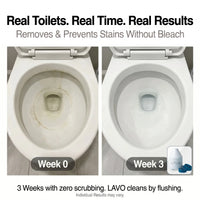
This is exactly why LAVO uses a citric-acid-based approach.
The goal was never to make a “natural” product just for the label.
The goal was to build something that actually makes sense for the problem most households have: recurring hard water buildup inside the toilet bowl.
That is why the system is built around:
-
Citric acid
-
In-tank use
-
Ongoing maintenance
-
Less scrubbing over time
-
A more practical alternative to bleach-first cleaning
So if you have tried “natural toilet cleaners” before and felt underwhelmed, the issue may not have been natural cleaning itself.
It may have been that you were using the wrong type.
Final takeaway
Natural toilet cleaners do work.
Just not all of them, and not for all problems.
If you want the most effective natural option for toilet rings, hard water, and limescale, citric acid is usually the clear winner.
That is the natural cleaner that makes the most sense when you want:
-
Real help with the ring
-
Less weekly scrubbing
-
A better fit for pets and septic systems
-
A more practical long-term solution
If that is the kind of natural toilet cleaning you are looking for, see how the LAVO citric-acid system works at lavopure.com.