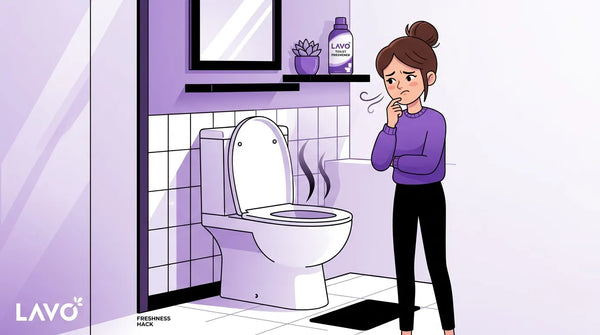

You lifted the tank lid to check something small, maybe a running toilet, maybe just curiosity, and now you are staring at a chalky white coating on the walls, the flapper, and half the parts inside.
Your first thought is probably: is this normal, or is something wrong with my toilet?
Here is the short version.
That white residue is almost always calcium carbonate, the same mineral that causes limescale on kettles, shower glass, and faucets. It comes from hard water sitting and refilling in your tank over and over again. It is not dangerous to you, but it is not harmless to your toilet either.
Quick answer
The white chalky buildup inside your toilet tank is usually mineral scale, mainly calcium carbonate, left behind by hard water.
Here is what matters most:
-
It is not toxic and not a health risk on its own
-
It is a functional problem for your tank parts over time
-
It builds up gradually with every single fill cycle
-
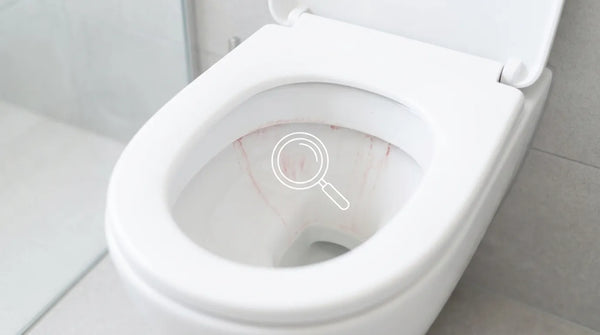
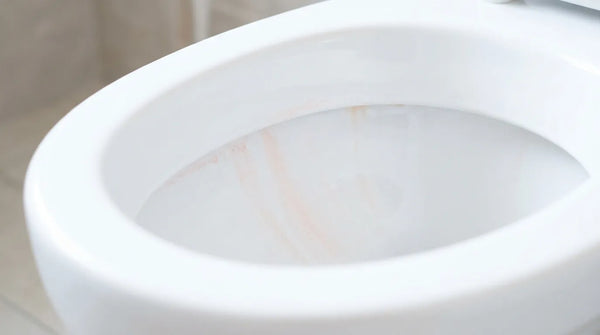
It is the same mineral process that creates the ring you see in the bowl
-
It can be removed with acid-based cleaning
If your toilet also develops a ring at the waterline, that is not a coincidence. It is the same hard water problem showing up in two places at once.
Where the white residue actually comes from
Most home water supplies contain dissolved minerals, mainly calcium and magnesium, picked up naturally as water moves through soil and rock before reaching your home.
That is completely normal, and the water itself is safe to drink.
The problem starts once that mineral-rich water sits inside your toilet tank between flushes.
The buildup happens in layers
Every time the tank refills, a tiny amount of calcium comes out of the water and bonds to the surfaces inside the tank. This is called mineral precipitation.
One fill cycle barely matters.
Weeks and months of fill cycles are what turn into the chalky white layer you are looking at right now.
Why hard water areas see it faster
If you live in a hard or moderately hard water area, this process speeds up.
In many U.S. households, hard water is the norm rather than the exception, which is exactly why this kind of buildup is such a common household discovery rather than a rare plumbing defect.
In particularly hard water regions, visible buildup can appear within weeks rather than months.
Is the white residue dangerous?
No, not in the way people often fear when they first see it.
Calcium carbonate is the same mineral compound found in many dietary calcium supplements. It is not toxic, and it is not a health hazard sitting in your tank.
The real concern is not your health. It is your toilet’s function.
What the white residue actually does over time
This is the part most people never think about until something starts acting strange.
On the flapper valve
The flapper is the rubber seal that controls water release into the bowl.
If mineral crust builds up on or around it, the seal may stop closing properly. That is one of the most common hidden causes of a toilet that keeps running or slowly leaking water.
On the fill valve
The fill valve and float mechanism can also collect buildup.
Once that happens, you may notice:
-
Overfilling
-
Underfilling
-
Inconsistent flush strength
-
A tank that behaves differently than it used to
On the tank walls
Over a year or two in a hard water home, scale can thicken noticeably on the tank walls.
That buildup does two things:
-
It slightly reduces usable water capacity
-
It creates a rough surface that can trap grime, and in some cases support mold or bacteria growth
In the bowl
Here is the connection most people miss.
The same mineral-heavy water depositing in your tank is also depositing in your bowl with every flush.
That is why hard water tanks and hard water toilet rings almost always show up together. They are not two separate problems. They are the same root cause showing up in two different places.
How to remove existing white residue
If the buildup is already there, you do not need to replace anything right away. In most cases, it can be dissolved.
For light to moderate buildup
-
Turn off the water supply valve behind the toilet.
-
Flush to empty most of the water from the tank.
-
Fill the tank with plain white vinegar.
-
Let it sit for 30 to 60 minutes.
-
Scrub gently with a long-handled brush.
-
Drain, refill with clean water, and flush a few times.
The acid in vinegar reacts with the calcium buildup and helps loosen lighter deposits.
For heavier, more established buildup
If the scale looks thick or has clearly been there a long time, vinegar alone is often too weak.
-
Empty the tank as above.
-
Mix citric acid powder into warm water.
-
Pour the solution into the tank.
-
Let it soak for 1 to 2 hours.
-
Scrub, drain, refill, and flush several times.
Citric acid is generally more effective than vinegar on older, thicker mineral deposits because it is a stronger and more consistent acid for dissolving calcium carbonate.
How to stop it from coming back
This is the part most cleaning advice skips entirely.
Cleaning the tank once does not stop hard water from refilling it again tomorrow.
If your water is hard, the mineral deposition process starts again with the very next fill cycle.
That is why a one-time scrub-and-forget approach usually leads to the same problem resurfacing months later, exactly like the ring that keeps returning in the bowl.
The more effective approach is ongoing prevention, using a citric acid treatment that continues working in the tank over time instead of only being used once during a deep clean.
Frequently asked questions
Is the white residue harmful to my health?
No. Calcium carbonate is not toxic and poses no health risk. The real impact is on your toilet’s parts and cleanliness, not on you.
Will the white residue go away on its own?
No. It does not dissolve with water alone. It builds up gradually and stays until it is chemically removed with an acid-based treatment.
How do I know if tank buildup has affected my flapper?
Add a few drops of food coloring to the tank without flushing, then wait about 15 minutes. If color shows up in the bowl, the flapper seal may be compromised and could need replacing.
What if the residue looks more like white flakes than a chalky coating?
Consistent white flakes, especially if they also appear in tap water elsewhere in the home, can sometimes point to a separate plumbing issue, such as an aging water heater component, rather than ordinary tank scale. If that is the case, it is worth having it checked separately from a normal hard water cleaning routine.
Does this mean my tank buildup and toilet ring are connected?
Yes, in most hard water homes they are the same underlying issue. If you are also dealing with a ring that keeps reforming at the waterline, that is worth addressing at the same time.
Where LAVO fits
Cleaning the tank once can fix what is already there, but it does not change what your water is doing every time the tank refills.
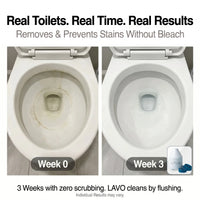
LAVO uses a citric-acid-based, controlled-release approach designed to keep working continuously instead of only being used during an occasional deep clean. Instead of waiting for buildup to reappear and cleaning it out again later, the goal is to keep interrupting the mineral deposition process with regular use, which is the same process responsible for both tank scale and bowl rings.
If your tank keeps collecting white buildup and your bowl keeps developing the same ring, that is a strong sign the underlying hard water problem has never really been addressed, only cleaned up temporarily.
Final takeaway
The white residue inside your toilet tank is almost always mineral scale from hard water, not a sign of a serious plumbing failure or a health concern.
Left alone, it can gradually affect your flapper, your fill valve, and your tank capacity, while also feeding the same ring problem in your bowl.
The fix has two parts:
-
Remove what is already there using an acid-based soak
-
Prevent new buildup with ongoing citric acid treatment
If you are tired of cleaning the same tank and the same ring over and over, see how continuous citric acid treatment works at www.lavopure.com.