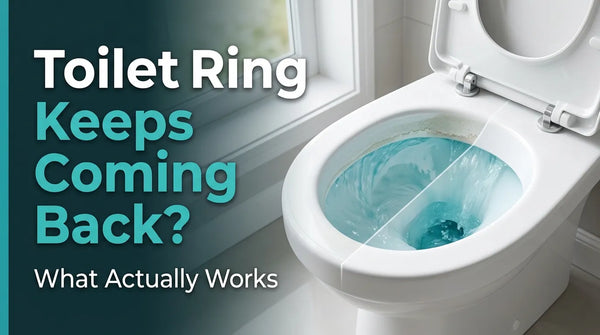

Quick Answer: The best toilet cleaner for hard water is one that contains an acid — specifically citric acid, hydrochloric acid (use carefully), or lactic acid. These chemically react with calcium carbonate (limescale) and dissolve it. Bleach-based cleaners don't work on mineral deposits because bleach is not an acid. For continuous hard water protection, a citric acid tank pod prevents deposits from forming with every flush.
Why Hard Water Makes Toilet Cleaning So Much Harder
Hard water contains elevated levels of dissolved calcium and magnesium. In the United States, about 85% of the water supply qualifies as moderately to very hard — the problem is widespread, particularly in the Southwest, Midwest, and Florida.
When hard water sits in your toilet bowl or flows across porcelain during flushing, the calcium and magnesium precipitate out of solution. They form a mineral crust — limescale — that bonds chemically to porcelain. This is different from regular dirt, which wipes off with a cloth. Limescale requires a chemical reaction to release.
The deposit is predominantly calcium carbonate, the same mineral that forms stalactites in caves. It's genuinely hard (in the physical sense), alkaline, and resistant to mechanical scrubbing without the right chemistry. You can scrub forever without fully removing it.
Why Most Popular Toilet Cleaners Don't Work on Hard Water
Walk through the toilet cleaner aisle and read the labels. The majority of products — Lysol, Clorox, generic store brands — list sodium hypochlorite as the primary active cleaning ingredient. That's bleach.
Bleach works beautifully for disinfection and stain removal on organic material. It does not work on mineral deposits. When you apply bleach to a limescale ring, the visible discoloration (the yellow or brown organic layer on top) bleaches away. The ring looks gone. Within days, it's back — because the mineral substrate never went anywhere.
The marketing copy on most toilet cleaners says things like "removes stains" and "eliminates odors." It does not say "dissolves limescale" because it cannot. That claim requires acid chemistry.
What to Actually Look For in a Hard Water Toilet Cleaner
You need a cleaner with one of these active ingredients:
Citric acid: The gold standard for household limescale removal. Gentle on surfaces, safe for septic systems, safe for pets and children. Effective at the low concentrations used in daily maintenance products.
Lactic acid: Found in some eco-friendly cleaners. Similar efficacy to citric acid, excellent safety profile.
Hydrochloric (muriatic) acid: Present in some heavy-duty toilet bowl cleaners under names like "The Works" or "Lysol Power Plus." Very effective on severe buildup but requires careful handling — gloves, ventilation, no mixing with anything. Not suitable for regular use.
Phosphoric acid: Used in some professional descaling products. Effective, but environmental concerns limit availability in some regions.
For daily maintenance, citric acid is the appropriate choice. For years of neglected severe buildup, a short-term hydrochloric acid treatment followed by citric acid maintenance is an effective protocol.
The Most Effective Method: Continuous Citric Acid Treatment
One-time acid applications remove existing deposits but don't prevent new ones from forming. If your hard water delivers roughly 2–3 grams of dissolved calcium per thousand liters (common in hard water areas), your toilet is getting dozens of mineral deposits per day.
The most effective long-term solution is continuous chemical treatment of your tank water. A citric acid pod in your toilet tank releases a small, controlled amount of citric acid with every flush. The bowl water arriving via the tank already contains enough dissolved acid to prevent calcium from adhering to the porcelain.
LAVO is built specifically around this principle. Each tab lasts about 30 days (roughly 250 flushes), and the reusable pod housing means you're only replacing a small tab once a month. Users with hard water typically see existing rings disappear within one to two weeks of installation, and new rings simply don't form.
For the hardest water areas — Phoenix, Las Vegas, Los Angeles, parts of Texas and Florida, much of the UK — the difference between no treatment and continuous citric acid treatment is genuinely dramatic.
Step-by-Step: How to Deep Clean a Severe Hard Water Ring
For a ring that's been building for months or years:
- Pour 1 cup of white vinegar (or a citric acid powder solution — 2 tablespoons in 2 cups water) directly into the bowl.
- Let it sit for 30–60 minutes without flushing.
- Scrub with a stiff brush while the acid is active. The combination of acid contact time plus mechanical action removes most deposits.
- For severe cases, apply undiluted "The Works" toilet bowl cleaner (hydrochloric acid) for 10 minutes with the bathroom ventilated. Don't let it contact metal fixtures.
- Flush thoroughly.
- Install a citric acid tank pod immediately. This prevents the ring from rebuilding.
For ongoing maintenance after the initial deep clean: No scrubbing required if you maintain continuous citric acid treatment. The system handles it with every flush.
Frequently Asked Questions
What is the best toilet bowl cleaner for hard water specifically?
Products containing citric acid, lactic acid, or phosphoric acid are most effective. For severe buildup, hydrochloric acid cleaners work fastest. For daily prevention, a citric acid tank pod is the most convenient and effective solution.
Will CLR work on toilet bowl limescale?
CLR (Calcium, Lime & Rust Remover) contains lactic acid and gluconic acid — it's genuinely effective on limescale. It's a good option for an initial deep clean. It's not designed for continuous in-tank use, so combine it with a tank pod for ongoing prevention.
How do I know if I have hard water?
White scale around faucets, showerheads that clog, spotty glassware from the dishwasher, soap that doesn't lather well, and frequent toilet rings are all hard water indicators. You can test definitively with inexpensive water hardness test strips.
Does WD-40 remove hard water stains in a toilet?
WD-40 is sometimes recommended as a folk remedy. It doesn't dissolve limescale — it can coat deposits and make them slicker, which sometimes helps them wipe away. It's not a reliable method for significant mineral buildup and can create a film that affects flushing.
What if I have a water softener — do I still need a toilet cleaner for hard water?
Whole-house water softeners treat all incoming water, so yes — they eliminate the hard water problem at the source. If your softener is functioning and maintained, limescale buildup should be minimal. Tank pods are a much lower-cost alternative to whole-house softening for households where the toilet is the primary concern.
Stop fighting hard water with the wrong chemistry. A citric acid tank system keeps limescale from forming at all. See how LAVO works here.