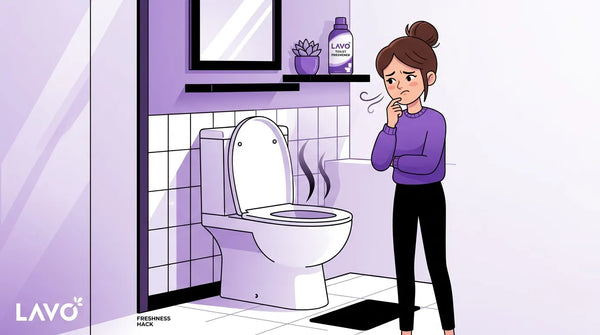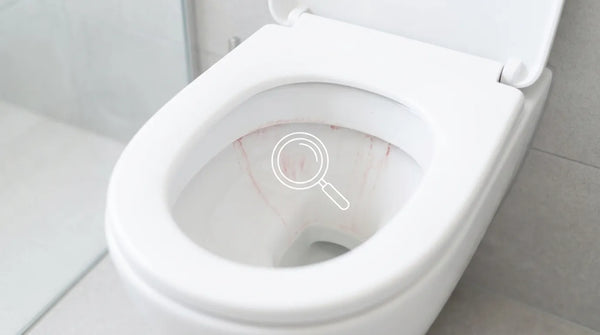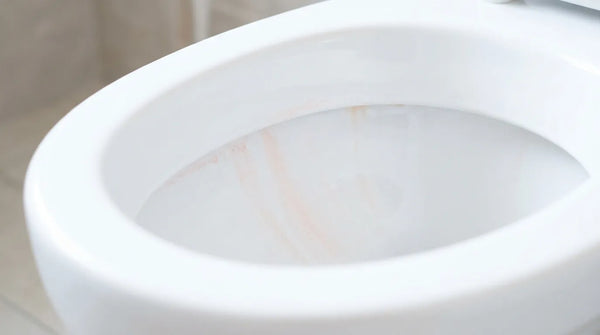

Quick Answer: The best toilet drop-in for limescale is one that contains citric acid, lactic acid, or another weak organic acid as the active ingredient. These chemically dissolve calcium carbonate deposits. Standard blue chlorine tablets don't work on limescale — they bleach the staining on top but leave the mineral deposit intact. If your main problem is the ring, chemistry type matters more than brand.
The Drop-In Tablet Market: What's Actually Being Sold
Walk into any grocery store or hardware store and you'll find the toilet drop-in section filled with blue, teal, or green tablets that promise a clean, fresh toilet. These products have been sold for decades and have enormous brand recognition.
Almost universally, the active cleaning ingredient in these products is sodium hypochlorite — bleach. The blue color is added for visual reassurance and because it fades (signaling when the tablet needs replacing). The fragrance makes the bathroom smell clean.
None of this is deceptive marketing. Bleach tablets do what they're designed to do: disinfect and add a pleasant scent. The problem is that most buyers purchasing these products are trying to solve a limescale and mineral ring problem — and bleach doesn't touch that.
Why Bleach Drop-Ins Don't Work on the Ring
Limescale is calcium carbonate. It's an alkaline mineral compound. Bleach is a strong alkaline oxidizing agent. Alkaline compounds don't react with other alkaline compounds to dissolve them — that's not how chemistry works.
When you drop a bleach tablet in the tank, the bleach dissolves into the tank water. With each flush, that water carries bleach into the bowl. The bleach oxidizes organic material (bacteria, mold, organic staining) and whitens any colored deposits. If your ring has a brownish or yellowish tint from organic material, the bleach can make it look lighter or even invisible.
But the calcium mineral underneath? Still there. Completely unaffected. Once the surface staining is bleached away, new mineral layers deposit on top of the remaining structure, and the visible ring is back within days.
What to Look For: The Chemistry That Actually Works
Citric acid drop-ins: The correct choice for limescale prevention. Citric acid reacts with calcium carbonate through a neutralization reaction — calcium citrate (soluble) + carbon dioxide + water. The mineral dissolves. No ring.
Enzyme-based drop-ins: Effective against organic staining and bacterial buildup. Do not dissolve mineral deposits. Good for general freshness, not the limescale problem.
Phosphoric acid products: Found in some professional-grade descalers. Very effective on limescale but less available in consumer formats and require careful handling.
Combination products: Some newer products combine a mild acid with enzymatic cleaners. These are the most comprehensive option if you want both mineral dissolution and organic stain prevention.
Pod vs. Tablet vs. In-Bowl: Which Format Is Best?
In-tank tablets (loose): Dissolve directly into tank water. Risk of releasing chemistry too quickly or unevenly. Bleach versions carry the rubber degradation risk.
In-tank pod systems: A controlled-release housing means the chemistry dissolves at a consistent rate over the designed lifespan (typically 30 days). The pod can be removed and examined without opening the tank. This is the preferred format for citric acid delivery.
In-bowl rim cages: Hang under the rim and release with each flush. Contact is with the bowl surface only, not the incoming water. Don't address mineral deposits forming from the tank water side.
Liquid drop-ins per-flush: Some systems add liquid directly to the bowl per flush. Expensive, high waste, and most are still bleach-based.
For consistent, effective limescale prevention with low maintenance, an in-tank citric acid pod is the best format. LAVO uses this design — reusable pod housing, replaceable citric acid tab, 30 days per tab.
Real-World Performance: What Users Report
The most consistent feedback from households switching from bleach drop-ins to citric acid pods is surprise at how long the ring stays absent. Bleach tablet users are accustomed to the ring reappearing within days. Citric acid users in the same hard water areas report weeks and months without any visible ring.
The blue tint in the bowl water from LAVO is also frequently mentioned as a useful visual indicator — when the water loses its tint, it's time for a new tab.
Frequently Asked Questions
Do any toilet drop-ins actually eliminate limescale permanently? As long as you're using a citric acid drop-in continuously, yes — the limescale doesn't return. "Permanently" with any dissolving product means "while the product is present." Stop the treatment, and hard water deposits will eventually start rebuilding over several weeks.
Are there toilet drop-ins safe for both my septic system and my pets? Yes — citric acid-based products meet both criteria. Bleach tablets do not (they harm septic bacteria and are a concern for pet households). Check the active ingredient: citric acid is safe for both.
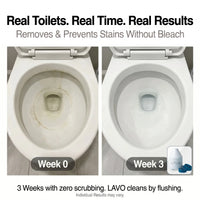
How long does it take for a citric acid drop-in to dissolve an existing ring? Most users with moderate limescale rings report visible dissolving within 3–7 days of installation. Severe multi-year buildup may take two to three weeks to fully dissolve.
Will a citric acid drop-in work in a low-flush or dual-flush toilet? Yes. The pod releases citric acid into the tank water regardless of flush volume. Each flush carries some acid into the bowl.
Can I use a citric acid drop-in alongside other cleaning products? Yes, though you should avoid mixing with bleach directly. If you occasionally use a bleach cleaner in the bowl for disinfection, that's fine — just don't mix the products directly or combine concentrated forms.
Stop dropping in blue tablets that bleach the problem without solving it. See how the citric acid approach works here.