
What Is a Brushless Toilet Cleaner? How the New Category of Automatic Cleaners Works
Quick Answer: A brushless toilet cleaner is a cleaning system designed to maintain a clean toilet bowl without scrubbing — using chemistry delivered automatically with each flush rather than requiring manual application. The best versions work by placing an active-ingredient pod inside the toilet tank, so that every flush delivers a controlled amount of cleaning chemistry into the bowl. With the right active ingredient (citric acid, not bleach), mineral deposits don't form and the bowl stays clean indefinitely.
The Difference Between Brushless Cleaners and Traditional Options
Traditional toilet cleaning has always been reactive: you wait until the toilet looks dirty, then apply a cleaner and scrub. The cleaning happens in response to a problem.
Brushless cleaners flip this model. They make cleaning continuous and preventive — happening with every single flush, whether or not you're paying attention. The toilet maintains itself rather than requiring periodic intervention.
This is a genuinely different approach, not just a marketing reframe. The physical experience of owning a toilet changes: you don't schedule toilet-cleaning sessions, you don't panic when guests arrive unexpectedly, you don't have to involve a brush in the process.
How In-Tank Brushless Systems Work
The mechanism is straightforward. A pod or housing sits inside the toilet cistern — the tank at the back of the toilet that holds the flush water. Inside the pod is the cleaning agent (ideally citric acid).
When the toilet is flushed, tank water flows through or past the pod. A small, controlled amount of the cleaning agent dissolves into the water. That water then flows into the bowl with each flush, delivering active cleaning chemistry everywhere the flush water reaches.
The key design features that separate a good brushless system from a mediocre one:
Controlled release rate: The pod should be designed to extend the life of the cleaning agent over approximately 30 days rather than dissolving it rapidly. This provides consistent chemistry rather than a brief burst followed by nothing.
Correct chemistry: Citric acid is the preferred agent because it dissolves limescale rather than bleaching it. Systems using bleach chemistry (most older in-tank products) do provide some benefit but cause the rubber seal degradation problem documented above.
Reusable housing: A pod housing that's replaced only when needed, with just the cleaning tab swapped monthly, produces less waste and less cost than a disposable system.
Why LAVO Is Designed This Way
LAVO is built around all three of these principles. The reusable pod housing sits in your tank indefinitely. Each citric acid tab inside it lasts approximately 30 days or 250 flushes — a slow, controlled release engineered to maintain the right concentration in your tank water.
The tab swapping mechanism is simple: pull the pod out of the tank, drop the old tab out, drop the new one in, place it back in the tank. No tools, no plumbing, no mess. The entire process takes about 30 seconds.
The bowl water maintains a slight blue tint while the tab is active — a visual indicator that the system is working. When the blue fades, the tab is done and it's time for a replacement.
What Makes Brushless Cleaners Better Than Rim Cages and Drop-In Tablets
Versus rim cages (those colored gel dispensers that hang on the bowl):
- Rim cages apply chemistry to the bowl surface only — they don't treat tank water
- They address the bowl from the outside; the mineral problem originates from the incoming tank water
- Most rim cage products are bleach-based and don't dissolve limescale
- The holder tends to breed bacteria and needs cleaning itself
Versus old-style drop-in bleach tablets:
- The chemistry difference is significant — citric acid vs. bleach
- Citric acid dissolves limescale; bleach doesn't
- Citric acid doesn't degrade rubber components; bleach does
- The controlled pod housing prevents the rapid dissolution and chemical waste of loose tablets
Who Benefits Most From Brushless Toilet Cleaners
The system provides the most dramatic improvement for:
Hard water areas: Where mineral rings form within days of scrubbing. The continuous citric acid chemistry breaks this cycle completely.
Households with pets or young children: Where bleach chemistry in the toilet is a concern. Citric acid is food-safe and non-toxic.
Rental households: Where making installations or modifications isn't an option. The pod simply sits in the tank — no modifications required.
Households on septic systems: Where chemical inputs matter for system biology. Citric acid is septic-safe; bleach is not.
Airbnb hosts and property managers: Where consistent toilet presentation between guests matters and manual cleaning after every stay is impractical.
Frequently Asked Questions
Does a brushless toilet cleaner completely eliminate the need to ever clean the toilet?
The interior bowl maintains itself. The exterior — seat, lid, handle, base — still benefits from a wipe-down periodically. A brushless system handles the hard part: the bowl interior and the mineral ring. Total weekly effort drops to under a minute for exterior wiping.
How long does it take to see results after installing a brushless cleaner pod?
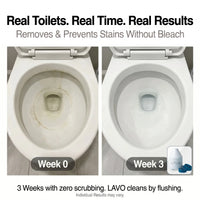
Most users see the bowl water turn blue on the first flush after installation. Existing mineral rings begin dissolving within 48–72 hours. Full clearing of established deposits typically takes 1–2 weeks.
Are brushless cleaners suitable for old or antique toilets?
Yes, with citric acid chemistry. Old toilets typically have older rubber components that are actually more vulnerable to bleach degradation — making the citric acid option even more appropriate for vintage fixtures.
Can I use a brushless system in a toilet that is used rarely (vacation home, guest bathroom)?
Yes. The system continues working as long as the tab is present, regardless of flush frequency. Low-use bathrooms can actually benefit more, since sporadic cleaning attempts often miss these toilets.
What happens if I forget to replace the tab?
Nothing immediately dramatic. The bowl will gradually lose its chemical protection and may begin developing a ring over a few weeks. Replace the tab and the ring will dissolve again within a few days.
The brushless toilet is not futuristic — it's available right now and requires 30 seconds to set up. See the full system here.