
Quick Answer: Occasional bleach use on toilet bowl porcelain is unlikely to cause visible short-term damage. However, frequent or concentrated bleach application can dull the glazed finish on older porcelain over time, making the surface more porous and more prone to staining. The bigger documented risk of bleach in toilets is to rubber and plastic tank components — not the porcelain itself.
How Toilet Porcelain Is Made (And Why It Matters)
Modern toilet bowls are made from vitreous china — a clay body fired at high temperatures with a glaze applied to the surface. The glaze is what creates the smooth, non-porous, stain-resistant finish you clean. It's essentially a glass coating over ceramic.
New porcelain glaze is highly chemical-resistant. It handles bleach without immediate degradation. But glazed surfaces are not indestructible — microscopic etching can occur over time with repeated harsh chemical exposure, particularly with concentrated formulas or extended contact time.
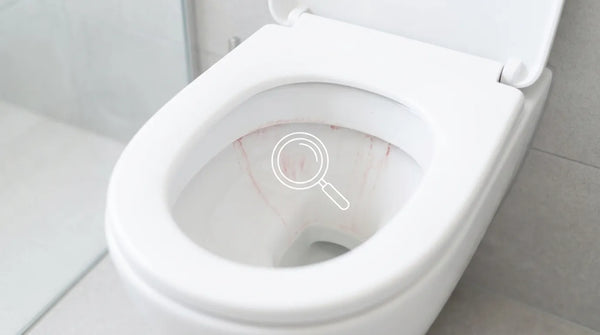
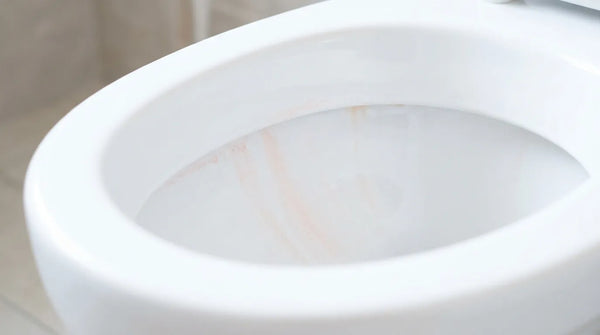
The porcelain body underneath the glaze is more porous. If the glaze develops micro-scratches (from abrasive cleaners) or chemical etching (from strong acids or prolonged bleach exposure), the underlying material becomes more exposed and more susceptible to staining.
The Real Bleach Damage in Your Toilet Happens in the Tank
The porcelain bowl is relatively resistant to standard bleach use. The place where bleach genuinely causes documented, measurable damage is inside the tank.
Your toilet tank contains rubber flappers, gaskets, fill valve seals, and other flexible components. These are the mechanisms that make your toilet function. Sodium hypochlorite — bleach — is an oxidizing agent that degrades rubber through a chemical process. Over months of continuous exposure (as occurs with in-tank bleach tablets), the rubber becomes brittle, swollen, or cracked.
This leads to:
- Running toilets (flapper not sealing)
- Phantom flushing
- Tank leaks
- Fill valve failure
These are real, documented problems. Major toilet manufacturers explicitly warn against in-tank chemical additives in their care instructions. Some warranty documents specifically exclude damage caused by chemical tablets.
What Can Permanently Damage Toilet Porcelain
While bleach at household concentrations rarely causes dramatic visible porcelain damage, several other cleaning practices cause real permanent damage:
Abrasive cleaners: Products containing pumice, baking soda as a primary abrasive, or steel wool scratch the glaze. Scratched glaze stains permanently. This includes "toilet stones" — pumice sticks often recommended for ring removal.
Concentrated acid products with extended contact: Strong hydrochloric acid (muriatic acid) left in the bowl for more than 10–15 minutes can etch even glazed porcelain. Brief contact for cleaning is fine; long soaking is not.
Undiluted liquid bleach poured directly into the bowl repeatedly: The concentration of straight bleach from the bottle is much higher than any tablet dissolves to. Regular use of straight Clorox directly on porcelain is more concerning than standard tablet products.
Physical impact: Dropping heavy objects into the tank or bowl can crack porcelain. Cracks are permanent and can worsen.
Protecting Your Toilet Long-Term
For the bowl itself: use cleaners with acid chemistry (citric acid, lactic acid) for mineral removal and regular maintenance. Avoid abrasive products entirely. If you do use bleach occasionally for disinfection, short contact time and thorough flushing is the protocol.
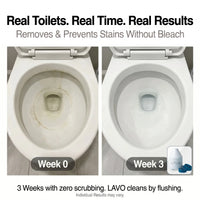
For the tank: stop using bleach tablets. Switch to a citric acid tank pod. LAVO was specifically formulated as a non-corrosive alternative — it cleans the bowl through every flush without bleach chemistry touching your rubber components.
A toilet maintained with citric acid chemistry instead of bleach will have a longer functional lifespan because the mechanisms inside the tank aren't being chemically degraded.
Frequently Asked Questions
Does Clorox bleach damage porcelain toilets? Standard Clorox liquid bleach at household dilutions is unlikely to visibly damage glazed porcelain with normal use. The greater concern is its effect on rubber components if used in the tank. Concentrated direct application or very long contact times have more potential for micro-etching.
My toilet bowl looks dull and yellowed despite regular cleaning. Did bleach cause this? Possibly, but more likely causes are micro-scratching from abrasive products (which allows mineral staining to penetrate), or hard water mineral film that bleach can't remove. A descaling acid product will often restore brightness that bleach can't achieve.
Can bleach remove the blue/green staining near the waterline? That blue-green staining is typically copper oxidation from pipes — bleach won't remove it and may make it worse. Citric acid or phosphoric acid cleaners are more effective on copper stains.
Is toilet bowl cleaner stronger than regular bleach? Most toilet bowl cleaners contain bleach at 2–5% concentration, similar to standard household bleach. The difference is the thickened gel formulation designed to cling to the bowl surface. The active chemistry is the same.
Can I use bleach on a colored or tinted toilet? Colored toilets (popular in the 1970s–80s) are even more susceptible to bleaching from sodium hypochlorite. Repeated use can noticeably lighten or streak the color. Acid-based cleaners are much safer for colored porcelain.
Protect your toilet from the chemistry that quietly causes damage. Switch to a citric acid cleaning system that's safe for every surface — including your tank components. Learn more here!