
Quick Answer: Bleach-based toilet cleaners are harmful to septic systems because sodium hypochlorite kills the beneficial bacteria that break down waste. Citric acid, enzyme-based cleaners, and baking soda-based products are safe for septic systems. For automatic in-tank cleaning in septic homes, citric acid is the most effective safe option.
Approximately 21 million American households rely on septic systems. For these households, every cleaning product decision has downstream consequences — literally. The wrong products don't just damage the toilet. They impair a system that, if it fails, costs $10,000 to $30,000 to replace.
How Septic Systems Actually Work
A septic system is not a simple waste container. It's a living biological system.
Wastewater from your home flows into a septic tank where solids settle to the bottom as sludge. The liquid layer flows out to a drain field where it percolates through soil. The critical process at every stage depends on anaerobic bacteria — microorganisms that consume and break down the waste.
Without these bacteria, the system fails in several ways:
• Solids don't break down and the tank fills rapidly
• Drain field clogs with undigested material
• Wastewater backs up into the home or surfaces in the yard
• The entire drain field may need replacement
Protecting these bacteria is not optional for septic homeowners. It's the fundamental maintenance requirement of the system.
Which Cleaners Kill Septic Bacteria
Sodium hypochlorite (bleach) — the most significant threat. Bleach is an antimicrobial agent by design. What kills bacteria in your bowl also kills bacteria in your septic tank. Small amounts in a single cleaning session may not cause immediate damage, but continuous use via in-tank bleach tablets represents a daily chlorine dose to your septic system.
Quaternary ammonium compounds ("quats") — found in many "antibacterial" cleaners. Highly effective at killing bacteria — including the ones your septic system needs.
Pine oil cleaners — effective disinfectants and therefore effective at killing septic bacteria.
Formaldehyde — sometimes found in tank deodorizer tablets. Strongly bactericidal.
Hydrogen peroxide — at higher concentrations, disruptive to septic bacteria. At very dilute concentrations (under 3%), impact is minimal.
Which Cleaners Are Safe for Septic
Citric acid — does not kill bacteria. Its mechanism is chemical dissolution of mineral compounds (calcium carbonate), not antimicrobial action. Citric acid in the concentrations present in toilet water has no meaningful impact on septic bacteria. It biodegrades completely into carbon dioxide and water.
Enzyme-based cleaners — use biological enzymes that complement, rather than compete with, septic bacteria. Generally considered the most septic-friendly cleaning approach.
Baking soda (sodium bicarbonate) — mild, non-antimicrobial, safe for septic. Limited effectiveness against hard water limescale.
White vinegar (acetic acid) — occasionally recommended for septic use. Safe in moderate quantities. Large regular quantities shift septic pH enough to stress bacteria — use moderately.
The In-Tank Tablet Problem for Septic Homes
Standard in-tank bleach tablets are particularly problematic for septic systems because they represent continuous, daily chlorine dosing. Unlike a weekly bleach scrub (where the bleach mostly remains in the bowl before flushing), in-tank tablets dissolve into every flush of tank water, sending chlorinated water directly to the septic system 10-20 times daily.
For septic homeowners specifically, this continuous dosing model with bleach represents the highest risk product category for their system.
Signs Your Septic System Is Stressed
If you've been using bleach-based in-tank products and notice any of these, consider a system inspection:
• Slow drains throughout the house
• Gurgling sounds in plumbing
• Wet spots or unusually green grass over the drain field
• Sewage odor inside or outside the home
• Tank requires pumping more frequently than the standard 3-5 year interval
Rebuilding septic bacteria after a disruption takes 4-6 weeks and can be assisted with septic-safe bacterial additive products (sold at hardware stores).
The Practical Recommendation for Septic Homes
For continuous automatic toilet cleaning in a septic-safe home: a citric acid in-tank pod is the most effective option available. It provides the same set-it-and-forget-it convenience as bleach tablets, with superior limescale performance, and zero impact on septic biology.
For manual cleaning: enzyme-based bowl cleaners or diluted citric acid solutions applied with a brush.
Avoid: any product containing sodium hypochlorite, quaternary ammonium compounds, or pine oil — used regularly in a septic home.
FAQ
Q: One bleach tablet won't hurt my septic system, right?
A single tablet is unlikely to cause acute system failure. Continuous daily use over months is where the cumulative impact on bacterial populations becomes significant.
Q: My septic system seems fine after years of bleach use. Does that mean it's okay?
Septic decline is gradual and often not obvious until significant damage is done. A system can lose 30-40% of its bacterial capacity before showing visible symptoms.
Q: How often should I pump my septic tank?
Most systems: every 3-5 years depending on household size. If you've used aggressive cleaners historically, more frequent inspection is advisable.
The septic system is one of the most expensive components of a home. Protecting it with the right cleaning products is a simple financial decision, not just an environmental one.
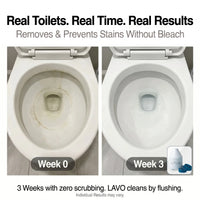
LAVO is certified septic safe. Citric acid has no impact on septic bacteria. Available at lavopure.com.