

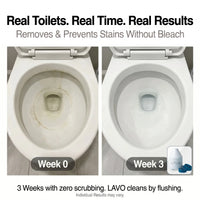
You scrubbed that ring off on Sunday, wrist aching, knuckles scraped raw against the tank lid, the pumice stone your neighbor swore by finally doing its job. By Thursday morning, before your coffee's even ready, that same brown-gray shadow is creeping back across the waterline like it never left. The window's cracked open, there's a faint mineral smell coming off the bowl, and you're standing there wondering if you actually cleaned anything at all.
Here's the question nobody answers straight: does the stone actually remove the problem, or does citric acid do the real work while the stone just makes you feel like you did something? The honest answer is more interesting than either camp wants to admit.
Two Tools Doing Two Completely Different Jobs
Pumice and citric acid aren't really competing products. They're solving the problem two different ways, and mixing up which one you need is exactly why the ring keeps winning. Pumice is a mechanical fix. Citric acid is a chemical one. Understanding the difference tells you which one you should actually reach for, and whether either one is doing anything about the root cause.
What's Actually Bonding to Your Porcelain
Every time your toilet tank refills, that water carries dissolved calcium carbonate and magnesium, invisible, harmless, completely normal. The trouble starts when water sits still and evaporates along the waterline. As it dries, the minerals left behind don't just sit on top of the glaze. They concentrate into rough micro-crystals that wedge themselves into the microscopic pores of aged porcelain. That's why an old toilet stains faster than a brand-new one. The glaze has more places for calcium to grab onto.
There's a second thing happening in that standing tank water that most people never think about. Room-temperature water sitting undisturbed for hours is an easy home for Serratia marcescens, the airborne bacteria responsible for that pink-orange slime creeping along the rim, along with the darker mold that shows up in the corners nobody scrubs. The mineral crust and the biofilm aren't separate problems. They build on each other, and that's a big part of why your toilet ring keeps coming back no matter how often you clean.
The Case for the Pumice Stone
A pumice stone works purely on friction. It's volcanic glass, full of tiny air pockets, and when it's wet, it's actually softer than the ceramic glaze underneath it. That's the whole trick. Wet pumice grinds away the crust without gouging the surface it's sitting on. Dry pumice is a different story entirely. Skip the water and you're dragging a rough, unyielding surface across glaze that's only rated a step or two harder on the hardness scale. The result is a network of hairline scratches you probably won't notice for months. Once they're there, though, every future mineral deposit has a rougher surface to latch onto, and the ring starts coming back faster, not slower.
So pumice can work, and it works well on crust that's already hardened past what a brush can touch. But it's a removal tool, not a prevention tool. It scrapes off what's already there. It does nothing to stop the next layer from forming the moment the water evaporates again.
The Case for Citric Acid
Citric acid takes the opposite approach, and it doesn't touch the glaze at all. It's a weak organic acid with three acidic sites, which is a fancier way of saying it has three separate chances to grab onto a mineral ion and pull it into solution. That process is called chelation: the acid binds chemically to calcium and magnesium, converting them from a hard, crystalline structure into water-soluble citrate compounds. Once they're in that dissolved form, they don't need scrubbing. They just rinse away with the next flush.
This is also where citric acid pulls ahead of bleach, which a lot of people reach for out of habit. Bleach oxidizes organic pigment, which is why stains look lighter afterward, but it does nothing to the mineral structure itself. The jagged crystal edges stay put, ready to grab fresh grime within a couple of days. If you've ever wondered why a "cleaned" bleach-treated bowl looks dingy again almost immediately, is bleach safe for toilet tanks gets into exactly why that happens, and it's not a coincidence.
The Quick Test to Know Which One You Actually Need
Before you commit to scrubbing or dissolving, run this thirty-second check. It tells you what kind of buildup you're actually dealing with.
- Wet your finger and rub it firmly along the waterline stain. If it feels gritty and doesn't budge, you've got hardened mineral crust that needs mechanical or acid contact time, not just a wipe.
- Pour a cup of plain white vinegar directly onto the worst section and wait five minutes. If you see bubbling or the stain visibly lightens, it's fresh-enough mineral scale that citric acid alone will likely dissolve.
- If the vinegar does nothing and the crust stays rock-hard, that's old, compacted buildup. Start with the wet pumice stone to break the surface layer, then follow with a citric acid soak to clear what's left in the pores.
- Check the color while you're at it. Brown or gray is mineral. Pink or orange is bacterial slime, and no amount of scrubbing solves that without addressing the standing water underneath it.
Why the Same Spot Keeps Losing the Fight
Here's the part that frustrates people the most: you can do everything right, wet stone, careful angle, a full citric acid soak, and the ring still shows up again within a week. That's because neither method changes what's happening between cleanings. The tank refills, sits, evaporates a little at the surface, and leaves a fresh trace of minerals behind every single time. One cleaning session, no matter how thorough, is treating a single frame of a process that never actually stops. This is the mechanism behind hard water slowly destroying your toilet even when you're cleaning it constantly. The water itself is the problem, not your effort.
Breaking the Cycle Before Minerals Get a Chance to Bond
Once you see it this way, the fix stops being about which weapon you grab for battle day and starts being about what's sitting in the tank the other twenty-nine days of the month. This is why treating the water continuously with a citric acid tank pod breaks the cycle before minerals have a chance to bond to porcelain in the first place. Instead of one concentrated acid hit followed by weeks of untreated refills, a slow-releasing pod keeps a low, steady dose of citric acid moving through every single flush. The calcium and magnesium get chelated into soluble citrates before they ever get the chance to dry and crystallize along the waterline. No scrubbing schedule to remember, no pumice stone sitting damp on the tank lid, just water that's already been handled by the time it hits the bowl.
It's not a magic fix for buildup that's already hardened over years of hard water. That older crust still needs the wet pumice stone or a proper soak to break loose the first time. But once the porcelain's actually clean, continuous treatment is what keeps it that way instead of watching the shadow creep back by the following weekend.
The Bottom Line
Pumice stone removes what's already there. Citric acid dissolves it without touching the glaze, and it's the only one of the two that can also work as ongoing prevention. If you're standing over a hardened ring right now, wet the stone, go easy, and follow up with an acid soak to clear the pores it can't reach. If you're trying to keep a clean bowl clean through the fall and into the drier winter months when heating systems pull moisture out of the air and speed up evaporation along that waterline, the acid is doing the actual long-term work. The stone just buys you a few days.