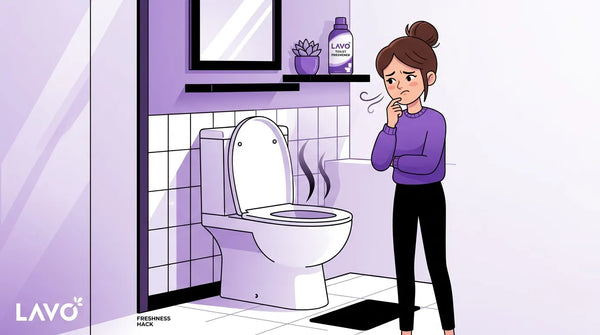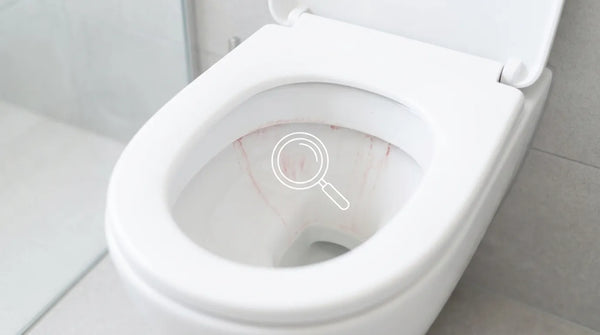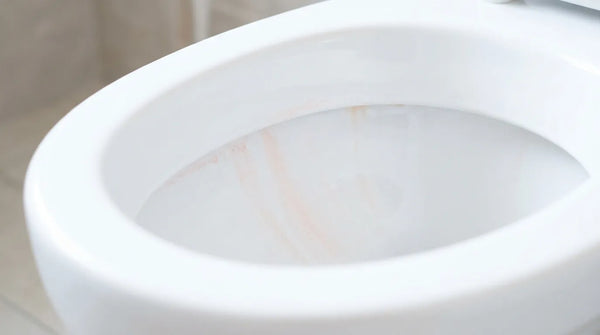

You scrubbed it Sunday night. By Wednesday, the ring is back — same spot, same dull yellow-brown line right at the waterline. So you clean more. Twice a week now. It still comes back.
Here's the thing nobody tells you: this isn't a cleaning problem. It's a math problem, and the schedule you're following was never designed to win it.
Quick answer: the "clean once a week" rule you've seen everywhere assumes soft water. If you live somewhere with hard water — most of the Southwest, much of the Midwest, large parts of the UK — your tap water is depositing fresh minerals into the bowl every single flush. In genuinely hard water, a weekly clean isn't maintenance. It's already behind.
The two totally different jobs you're accidentally combining
Most people treat "clean the toilet" as one task. It's actually two, and they don't run on the same clock.
Sanitation is about bacteria — the seat, the lid, the flush handle, the rim. This is a hygiene issue, and it scales with how many people use the toilet.
Limescale prevention is about minerals — the ring at the waterline. This has nothing to do with hygiene and everything to do with your water chemistry.
Confusing the two is exactly why the ring feels unbeatable. You're sanitizing on a people-based schedule while trying to fight a water-based problem with the same rag.
Why the ring wins even when you're doing everything "right"
Limescale isn't dirt. It's calcium carbonate — the same mineral that builds stalactites in caves — bonding to your porcelain with every flush. Here's how fast that happens depending on your water:
-
Soft water (under 60 mg/L): Slow buildup. Monthly or fortnightly cleaning genuinely keeps up.
-
Moderately hard water (60–120 mg/L): Weekly cleaning matches the pace, roughly.
-
Hard water (120–180 mg/L): Weekly cleaning is already reactive — the ring is back before your next scheduled clean.
-
Very hard water (180+ mg/L): Even twice-weekly scrubbing can't keep pace. This is the "scrub Monday, ring back Wednesday" trap.
If you're in that last category and cleaning constantly, you haven't failed at cleaning. You've been assigned a schedule that was mathematically impossible from the start.
The part almost nobody tells you
Here's the question that changes everything: if your bowl already has a visible ring the moment you sit down to clean it, you're not maintaining anything — you're perpetually catching up.
That's not a frequency problem. More scrubbing, more often, with the same tools, doesn't fix a rate problem. You can't out-clean a chemical process that restarts with every flush. The only way to actually win is to change what's in the water before it ever reaches the porcelain.
How to stop needing to clean the bowl at all
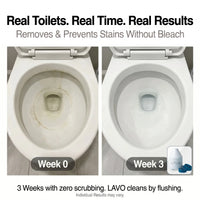
When the water filling your tank already contains a small amount of citric acid — from a continuous tank pod — the calcium in your water can't bond to the porcelain in the first place. No bonding, no ring, no scrubbing.
That doesn't eliminate cleaning entirely. It collapses your workload down to the one job that actually matters day to day: wiping the seat, lid, and rim. That's a 2-minute wipe with a disinfectant cloth, not a bowl-scrubbing session.
A realistic schedule, once the water is handled
Solo or couple, any water hardness:
-
Seat/lid/rim wipe: once weekly
-
Bowl: check monthly, should need nothing
-
Under-rim: monthly with a brush
-
Tank pod: swap tab every 30 days
Family household, hard water:
-
Seat/lid/rim wipe: 2–3x weekly
-
Bowl: no scrubbing needed with tank treatment running
-
Under-rim: every 2–3 weeks
-
Tank pod: swap tab every 30 days
Notice what disappeared from this list entirely: bowl scrubbing. That's the whole point.
Frequently asked questions
Do I need to clean more if someone in the house is sick?
Yes — daily disinfection of the seat, handle, and surrounding surfaces during a GI illness is genuinely recommended, regardless of your water hardness situation.
What about a guest bathroom that's barely used?
Low sanitation risk, but limescale doesn't care how often the toilet is flushed — it cares how long water sits in the bowl. A continuous tank pod keeps a rarely-used toilet looking clean between visits without any dedicated routine.
Does my toilet need disinfecting or just cleaning?
For a healthy household, removing organic buildup matters more than hospital-grade disinfection. Save the heavier disinfecting for illness in the house or immunocompromised family members.
The bottom line
"Clean weekly" is fine advice for someone with soft water. For millions of households, it's a schedule that was never going to work, no matter how disciplined you are about sticking to it.
The ring isn't a discipline problem. It's a chemistry problem — and it's solved once, not every Sunday.
See how a continuous citric acid pod stops the ring from forming in the first place here — try it risk-free for 30 days.