
Fall is when a lot of homeowners finally sit down and do the paperwork they've been avoiding all year: insurance renewals, home maintenance logs, warranty folders. If you're one of them and you happen to pull out your toilet's manual while doing a fall home maintenance sweep, you might stumble onto a sentence that stops you cold. Somewhere in the fine print, several major manufacturers explicitly exclude damage caused by in-tank chemical tablets from their warranty coverage.
So does using bleach tablets void your toilet's warranty? For a surprising number of brands, the honest answer is yes, and most people using them have no idea this clause even exists until something breaks and the repair bill lands squarely on them.
This Is Different From "Bleach Is Bad for Your Tank"
We've covered the mechanical side of this extensively in are bleach tablets bad for your toilet tank, which focuses on what chlorine actually does to rubber flappers and gaskets over time. This article is about something separate but related: the paperwork consequence of that damage. Even if you already know bleach tablets can degrade rubber components, most people never connect that to the fact that fixing it might not be covered, or that using the tablets in the first place could be the reason a claim gets denied.
Why Manufacturers Added This Clause in the First Place
Warranty exclusions don't get written for no reason. Toilet manufacturers add specific language excluding in-tank chemical tablets because they've seen the failure pattern repeat often enough to write a rule about it. Chlorine-based tablets sitting continuously in tank water accelerate wear on rubber and rubberized plastic components at a rate the manufacturer never designed for or tested against. From their perspective, that's a modification to normal use conditions, not a defect in the product itself, which is exactly the distinction warranties are built around.
What the Fine Print Typically Says
Warranty language varies by brand, but the pattern is fairly consistent across the industry. Look for phrasing along these lines in your toilet's documentation:
- Exclusions for damage caused by "chemical cleaners," "in-tank tablets," or "drop-in cleaning products"
- Specific mention that chlorine or bleach-based products are not recommended for tank use
- Language limiting coverage to damage from "normal use" or "intended use," with chemical tablet use sometimes classified separately
- Flapper and fill valve components often carrying shorter warranty periods than the bowl and tank itself, partly anticipating this exact wear pattern
Not every manufacturer spells this out with equal clarity, and some documents bury it in a general "improper use" clause rather than naming bleach tablets directly. That vagueness cuts both ways. It can make it harder for a company to enforce the exclusion, but it also means you can't assume you're covered just because your specific product page doesn't loudly warn against tablets.
How to Actually Check Your Own Toilet
This is a genuinely useful five-minute fall task while you're already going through home documentation. Pull up your toilet's warranty card or search the manufacturer's website for your model number plus "warranty." Look specifically in the exclusions section, not just the coverage summary, since that's almost always where this language lives. If you can't find your paper documentation, most major brands host PDF warranty guides online that are searchable by keyword.
What Happens If You Need a Claim and This Comes Up
In practice, a manufacturer isn't going to inspect your tank before approving basic replacement parts for something minor. Where this actually matters is when something bigger goes wrong, a cracked tank, a failure that causes water damage to flooring or a ceiling below, or a component failure serious enough that you're filing a real claim rather than just buying a five-dollar flapper at the hardware store.
In those higher-stakes situations, if a technician or adjuster identifies chlorine tablet residue or visible chemical degradation consistent with in-tank tablets, that can absolutely become the basis for a denied claim. You're not just out the cost of the part at that point. You're potentially covering water damage repairs entirely out of pocket, which is a very different financial conversation than a ten-dollar flapper.
This Extends Beyond the Manufacturer, Too
It's worth knowing that this isn't only a manufacturer warranty issue. Home warranty companies and some homeowner's insurance policies include similar exclusions for damage resulting from "improper maintenance" or use of non-recommended products. If you've ever wondered why a home warranty claim for a toilet leak got more complicated than expected, an in-tank tablet habit is a common, quietly overlooked factor adjusters are trained to look for.
The Simple Fix: Read Before You Drop Anything In
You don't need to memorize warranty law to protect yourself here. The practical rule is straightforward: before using any drop-in tank product, chlorine-based or otherwise, check whether your specific toilet's documentation excludes it. If it does, and most bleach tablets fall into that excluded category for most major brands, using it anyway is a choice to trade convenience for warranty risk, and it's worth making that trade consciously rather than by accident.
If your toilet's warranty already expired years ago, this is obviously a lower-stakes concern for you specifically, though the mechanical wear on your flapper and fill valve is still happening regardless of whether anyone's paperwork cares about it.
What to Use Instead, Warranty-Safe or Not
This is precisely the gap citric acid tank pods are built to fill. Citric acid doesn't carry the same chlorine-driven rubber degradation risk that gets bleach tablets explicitly excluded from warranty coverage in the first place. It's a mild organic acid, not an oxidizing bleach agent, which is a meaningfully different chemical category as far as most manufacturers' concerns about tank components are concerned.
That doesn't mean every citric acid product is automatically warranty-safe by default, since coverage language is written by each manufacturer independently. But it does mean you're not fighting the exact chemistry that warranty departments specifically wrote their exclusion clauses around. If you're weighing the two options generally, our full breakdown in citric acid vs. bleach for toilet cleaning covers the broader performance differences beyond just the warranty angle.
And if your household relies on a septic system, that's a separate but related consideration worth checking too, covered in are your toilet tablets quietly destroying your septic tank, since chlorine tablets create risk in more than one direction at once.
The Bottom Line
Most people using bleach tablets have simply never read the fine print, not because they're careless, but because nobody expects a cleaning habit to have warranty implications. If you're doing any kind of fall home maintenance review this season, pulling your toilet's warranty documentation and actually reading the exclusions section takes five minutes and could save you a genuinely unpleasant surprise down the road.
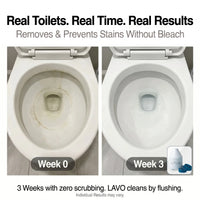
See how LAVO's citric acid pod cleans your tank continuously without the chlorine-driven wear pattern most manufacturers specifically warn against.