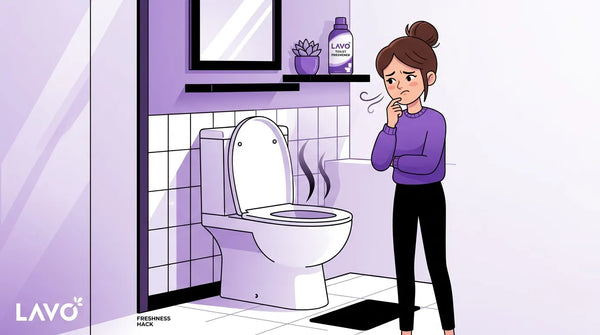

Everyone assumes bleach is the odor-killing champion. It's what your grandmother used, it smells intensely "clean," and the fumes alone make you believe something powerful just happened. But if you've ever bleached a smelly toilet and had the odor creep back within a day or two, you already know something doesn't add up. So which one actually wins for smell specifically, not stains: citric acid vs bleach for toilet odor?
This is a genuinely different question than the classic "which one removes the ring better" debate. Odor and stains come from different mechanisms, and the winner isn't necessarily the same for both. Let's separate the two and settle it properly, especially since summer heat tends to make bathroom odor problems worse for everyone right when guests are coming through your door more often.
Why Bleach Smells Powerful But Doesn't Always Work Long-Term
Bleach genuinely is an effective disinfectant. It kills a wide range of bacteria on contact, which is exactly why it feels like the obvious choice for odor. Most toilet smell is bacterial in origin, so killing bacteria should solve the problem, right?
Here's the catch. Bleach only kills what it directly touches, for as long as it's wet and active, which is a fairly short window. Once it evaporates or gets flushed away, its job is done, and it leaves behind zero residual protection. If the actual source of your odor is bacteria living somewhere bleach doesn't reach well, like under the rim or inside the tank, you're really only treating the surface you can see.
We go deep on exactly where odor-causing bacteria likes to hide in why your toilet still smells even after you clean it. The short version: most persistent toilet odor isn't coming from the visible bowl surface at all.
The Sharp Smell Isn't Proof of Success
This is the part that trips people up. That sharp, chemical smell right after bleaching feels like victory. It's not actually evidence that odor is gone, it's evidence that bleach fumes are currently strong enough to override everything else in the room. Once those fumes dissipate in an hour or two, whatever was underneath is still there, waiting.
How Citric Acid Approaches the Same Problem Differently
Citric acid isn't a disinfectant in the way bleach is. It doesn't claim to nuke bacteria on contact. Instead, it works by lowering the pH of the water and dissolving the mineral buildup that bacteria often use as a rough, hospitable surface to cling to in the first place.
Think of it this way: bleach fights the bacteria directly, once, and then walks away. Citric acid, especially when delivered continuously through a tank pod, keeps the water mildly acidic all the time, which makes the environment less comfortable for bacteria to colonize and rebuild between cleanings. It's less of a knockout punch and more of consistently changing the terms of the fight.
Why This Actually Matters More for Odor Than for Stains
Stains are a one-time visible deposit you can scrub or dissolve. Odor is an ongoing biological process that restarts constantly as long as conditions are right. That's exactly why a single strong disinfecting hit, however powerful in the moment, tends to lose to a milder treatment that's actually present in the water continuously.
This mirrors what we found comparing the two chemicals for staining in our original breakdown, citric acid vs. bleach for toilet cleaning, but odor makes the case even more clearly, since smell is driven by an ongoing process rather than a fixed deposit sitting there waiting to be dissolved once.
The Head-to-Head, Broken Down by Scenario
- Fresh odor after a party or heavy guest use: Bleach wins here for a quick, one-time knockdown. If people are arriving in an hour and you need an immediate result, bleach's fast disinfecting action is genuinely useful.
- Recurring odor that comes back within days: Citric acid wins clearly. If you're bleaching regularly and the smell keeps returning anyway, that's a sign the source isn't being addressed, just temporarily masked.
- Tank odor specifically: Citric acid wins by a wide margin. Bleach tablets in the tank cause their own separate problems by degrading rubber components over time, which we cover in are bleach tablets bad for your toilet tank. Citric acid pods are built specifically for continuous tank use without that risk.
- Homes with pets or small kids: Citric acid wins on safety alone, since it doesn't produce the same fumes or require the same ventilation caution that bleach does.
Why Summer Makes This Comparison Matter More
Warm weather speeds up bacterial reproduction across the board, which means whatever odor source you have is working faster and rebuilding quicker than it would in cooler months. If you're relying on an occasional bleach hit to manage odor, summer heat shortens the window between "smells fine" and "smells off again" considerably. This is exactly the seasonal pattern we detail in why your toilet smells worse in summer, and it's a big part of why a continuous approach starts to matter a lot more once temperatures climb.
So Which One Should You Actually Use?
Honestly, there's a reasonable case for using both, just for different jobs. If you've got guests arriving in twenty minutes and need an immediate, strong result, a quick bleach clean of visible surfaces isn't the wrong move for that specific moment.
But if you're trying to solve the underlying reason your toilet keeps smelling off between cleanings, especially through a hot summer with heavier bathroom traffic, that's a continuous problem that needs a continuous solution. A one-time disinfecting hit was never going to fix an ongoing biological process, no matter how strong the fumes felt in the moment.
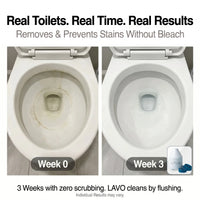
This is exactly the gap a citric acid tank pod is built to close. Instead of an occasional strong treatment that fades within hours, it keeps your tank water mildly acidic with every single flush, working against both the mineral buildup and the bacterial environment that odor depends on, continuously rather than reactively.
The Bottom Line
Bleach wins the sprint. Citric acid wins the marathon. If your toilet odor is a recurring, "why does this keep happening" kind of problem rather than a one-time "guests are here in ten minutes" emergency, the chemistry that actually solves it isn't the one that smells the strongest in the moment. It's the one that's still working three days from now.
See how a continuous citric acid pod tackles the source of recurring toilet odor, not just the smell of it for an hour.