
Quick Answer: Inside your toilet tank you'll find: the fill valve, flush valve, flapper, float, and water. Over time, mineral deposits, rust, mold, and bacteria accumulate in the tank — and since this is where your toilet bowl water comes from, what's in the tank ends up in the bowl on every flush.
Most people clean their toilet bowl weekly. Almost nobody ever opens the tank lid.
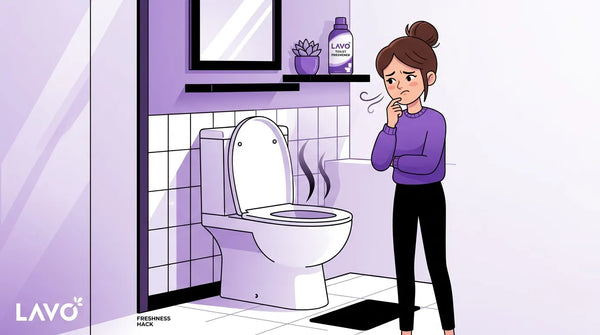
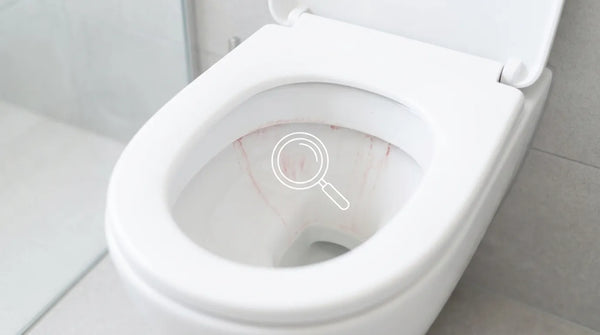
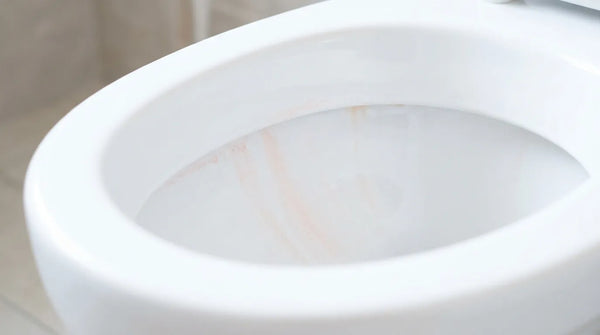
This is a mistake — and it explains why that ring in your bowl never truly disappears.
What's Actually In There
Lift the lid on most toilets and you'll find standing water, some mechanical components, and usually a surprising amount of brown, rust-colored mineral buildup coating the walls. In older toilets or hard water areas, it can look genuinely alarming.
The main components you'll see:
• Fill valve — refills the tank after flushing
• Flush valve and flapper — controls water release when you flush
• Float — monitors water level
• Overflow tube — prevents flooding
• Water — typically 1.5 to 3.5 gallons depending on toilet age
What you won't see coming: in most homes, the tank walls are coated in calcium carbonate — the white and brown mineral scale that comes from your water supply depositing trace minerals with every fill cycle. Over months and years this builds into thick visible deposits.
Why the Tank Is the Source of Your Cleaning Problems
Here's what nobody explains: your toilet bowl water comes from the tank. Every single flush, water flows from the tank through the bowl. If the tank water is mineral-heavy, every flush deposits calcium onto the bowl surface at the waterline.
This is why people who scrub their bowl every week still have the ring back by Thursday. They're treating the symptom (the bowl) while the cause (the tank water chemistry) continues unchanged.
Cleaning the bowl removes visible buildup. It does nothing to stop the next 250 flushes from re-depositing calcium immediately afterward.
How to Actually Clean Your Toilet Tank
The manual method:
Turn off the water supply valve behind the toilet. Flush to empty the tank. Spray the interior with white vinegar or a citric acid solution. Let it sit for 30-60 minutes — this is the dwell time most people skip, and it's where the actual chemistry happens. Scrub with a long brush, turn the water back on, flush several times.
This works but requires doing it every 2-3 months to keep up with mineral accumulation. Most people do it never.
The automatic method:
Place a citric acid pod inside the tank. Every time the tank refills after a flush, the water picks up a precise amount of citric acid. This prevents mineral deposits from forming on both the tank walls and the bowl simultaneously — because the chemistry is treating the water before it ever reaches the bowl.
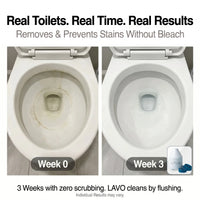
Results appear within 48-72 hours: the water turns blue, visible buildup begins dissolving, and the bowl stays clean without any scrubbing.
The Bleach Tablet Trap
Most people who think about tank maintenance reach for bleach drop-in tablets. These seem logical — they're designed for tanks, they're cheap, they're convenient.
The problems are significant:
First, bleach doesn't dissolve calcium or mineral deposits. It bleaches the color of the stain temporarily. The calcium remains. The ring returns.
Second — and this is what your plumber knows but rarely volunteers — chlorine bleach degrades rubber over time. Your tank contains multiple rubber components: the flapper, the fill valve seal, the washers. Continuous bleach exposure makes rubber brittle and cracked. Over 12-18 months, this causes running water, leaks, and the need for repairs that cost far more than a year's worth of cleaning products.
What You'll Find If Your Tank Has Been Neglected
Lifting the lid on a tank that's never been cleaned can reveal:
• Thick orange-brown calcium scale on the walls
• Black mold at the waterline
• Corroded metal components
• Discolored water
None of this is catastrophic — a good citric acid treatment will address most of it within 2-4 weeks. But it does explain why a bowl can look clean after scrubbing and still smell faintly unpleasant. The source of the contamination isn't in the bowl.
FAQ about your Toilet Tank
Q: Is it safe to put cleaning products in the toilet tank?
Citric acid is pH-safe for all tank materials including rubber, plastic, metal, and porcelain. Bleach-based products are not.
Q: How often should I clean my toilet tank?
With an automatic citric acid system, continuous treatment means you're never "cleaning" it at all — you're preventing buildup. Without automation, manual cleaning every 2-3 months is recommended for hard water areas.
Q: Will it affect my toilet's flush performance?
A clean tank with healthy rubber components actually flushes more efficiently than one corroded by bleach. Replacing degraded flapper valves is one of the most common plumber house calls — and one of the most preventable.
The toilet tank is the most ignored part of bathroom maintenance. Starting there, rather than at the bowl, is what actually produces lasting results.
LAVO's automatic tank pod keeps your tank and bowl continuously clean with every flush. Available at lavopure.com — free tracked shipping, 30-day guarantee.