
Introduction: Why “Brushless” Sounds Amazing (But Often Disappoints)
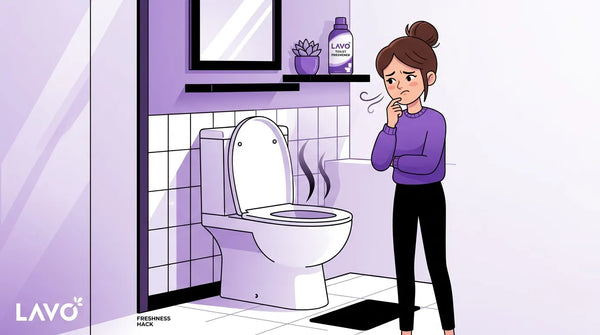
If you’re googling “brushless toilet bowl cleaner,” there’s a good chance you’re staring at a toilet ring you’re sick of scrubbing. Maybe you’ve already tried blue tablets, drop‑in cleaners, magic gels, or even changing your toilet brush every few months. Yet somehow, the ring still comes back.
The idea of a brushless cleaner is simple: drop something in, walk away, and let it handle the dirty work for you. No splashing, no bending over the bowl, no rubber gloves. The problem is that most “brushless” solutions don’t actually stop the buildup that causes stains in the first place – they just make the water look cleaner or smell nicer for a few days.
In this guide, we’ll break down what “brushless toilet cleaner” really means, why most products fail with hard water, and how a tank‑based pod can keep your bowl clean for up to 90 days without you touching a brush.
The Real Reason Your Toilet Needs a Brush
Most people assume the toilet brush is there to remove “dirt.” In reality, you’re mostly fighting mineral deposits.
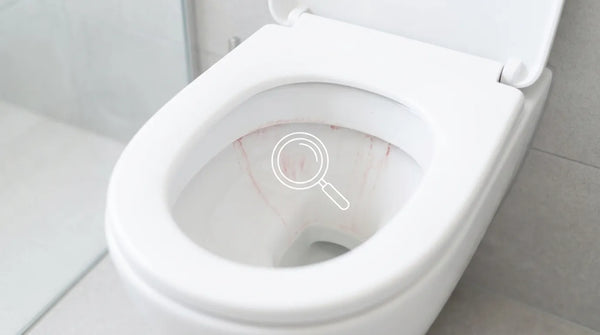
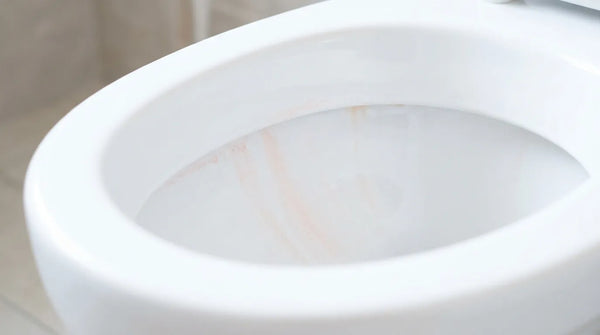
If you live in a hard‑water area, your water contains dissolved minerals like calcium and magnesium. Every time you flush, a thin film of that mineral‑rich water sits on the porcelain. When the water evaporates, those minerals stay behind, forming a rough, almost invisible layer on the surface.
Once that mineral layer is there, three things happen:
-
Pigments from waste and cleaning chemicals stick more easily.
-
Bacteria and biofilm find a rough surface to cling to.
-
Every flush adds more minerals on top, thickening the ring.
Your toilet brush is scraping away at this mineral shell. That’s why it feels like you’re scrubbing and scrubbing, but the ring comes back in days. You’re treating the symptom (the visible stain), not the underlying mineral buildup.
Why Most “Brushless” Toilet Cleaners Don’t Solve the Problem
If you search for brushless or no‑scrub cleaners, you’ll typically find three categories:
-
Drop‑in bowl tablets
These sit in the bowl or hang from the rim. They release dye and surfactants that make the water look blue and slightly slicker. The bowl may look cleaner, but the minerals are still bonding to the porcelain. As soon as the tablet runs out, the ring reappears – often worse than before. -
Squeeze‑bottle gels and foams
Marketed as “no brush necessary,” these cling to the sides of the bowl for a few minutes. In reality, manufacturers still recommend a quick scrub for best results in the fine print. They can help remove recent stains, but they don’t change how your water behaves with the porcelain long‑term. -
Bleach‑heavy tank tablets
These go in your tank, but rely mostly on chlorine bleach. They can lighten stains and kill bacteria in the water, but bleach is harsh on the rubber and plastic parts inside your tank, and it still doesn’t stop minerals from falling out of hard water and clinging to the bowl.
In short: most brushless products focus on disguising or briefly loosening the stain, not on preventing minerals from ever bonding to the surface in the first place.
The Tank Is the Real Battleground (Not the Bowl)
To truly get rid of your toilet brush, you have to stop mineral buildup where it starts: in the tank.
Here’s why that matters:
-
Every flush pulls water from the tank into the bowl.
-
If that tank water is already saturated with minerals, every flush is “painting” a new mineral layer on the bowl.
-
If you can condition the water in the tank so minerals don’t stick as easily, the bowl has a smooth, slicker surface after each flush – which means stains struggle to form.
Think of it like a dishwasher: if your water softener is working, you don’t have to scrub glasses after every wash. The system handles the hard water for you.
A true brushless solution needs to live in the tank, not only in the bowl, and it needs to work with hard water over weeks – not just in the five minutes after you squeeze a gel under the rim.
What to Look for in a Brushless Toilet Bowl Cleaner
Before we talk about specific products, it helps to know which criteria actually matter. A brushless cleaner that fails one of these is likely to disappoint you:
-
Hard‑Water Performance
Does it specifically address limescale, mineral rings, and hard‑water stains? Look for wording like “prevents hard water buildup” or “keeps minerals from sticking,” not just “cleans and freshens.” -
Tank‑Safe and Septic‑Safe
Anything that sits in your tank needs to be safe for rubber seals, flappers, and fill valves. Bleach and some strong acids can degrade these over time, leading to leaks and expensive repairs. If you’re on a septic system, it also has to be safe for beneficial bacteria. -
Set‑and‑Forget Lifetime
A truly brushless cleaner should not require daily or even weekly attention. Look for products that last at least 30–90 days per dose, depending on household size. -
Non‑Toxic and Pet‑Safe
If your dog drinks from the bowl (even when you wish they wouldn’t), you don’t want volatile fumes or harsh residues. A non‑toxic formula is essential in homes with kids and pets. -
Real‑World Before/After Proof
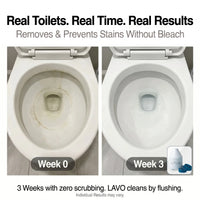
Marketing claims are cheap. Look for photos or reviews showing toilets that had recurring rings from hard water and stayed clean over time – not just “it smells nice.”
How a Tank Pod Works (And Why It’s Different)
A modern tank pod like LAVO’s brushless care pod approaches the problem differently.
Instead of dumping bleach into the water, its ActiveCore™ technology slowly releases mineral‑conditioning agents into the tank over 90 days. Each flush sends conditioned water into the bowl, making it harder for minerals to bond to the porcelain in the first place.
The effect over time:
-
The rough mineral “shell” stops getting thicker.
-
Every flush brings slightly more conditioned water across the bowl.
-
Existing stains become easier to remove, and new stains struggle to form.
Installation is simple:
-
Remove the lid from your toilet tank.
-
Drop one pod in the corner of the tank, away from the flapper and moving parts.
-
Replace the lid – you’re done for about 90 days.
No brush, no blue dye, no constant re‑applying foam around the rim.
Brushless Pod vs. Traditional Solutions: Honest Comparison
Let’s compare a tank pod to the three main alternatives:
1. Versus bowl tablets
-
Tablets: Color the water, may mask odor, minimal impact on hard water.
-
Tank pod: Conditions water before it ever reaches the bowl, directly targeting the cause of rings.
2. Versus rim gels and foams
-
Gels/Foams: Require regular squeezing, often still need a quick scrub, easy to forget.
-
Tank pod: One drop‑in every 3 months, then set‑and‑forget.
3. Versus bleach tablets
-
Bleach tablets: May weaken rubber parts and seals in the tank over time, not ideal for septic.
-
Tank pod: Formulated to be plumbing‑safe and septic‑safe while focusing on minerals, not just disinfecting.
For someone specifically searching “brushless toilet bowl cleaner,” the key promise is less work, not just whiter water. A tank pod is one of the few solutions that delivers on that promise consistently with hard water.
Who a Brushless Tank Pod Is Perfect For
A tank‑based brushless cleaner is especially good if:
-
You live in a hard‑water area and your toilet ring comes back within days of scrubbing.
-
You have mobility issues or simply hate bending and scrubbing.
-
You want a non‑toxic, low‑odor solution safe for kids and pets.
-
You’re renting and can’t replace the toilet, but want to keep it looking new.
-
You’re tired of buying multiple cleaners (descalers, bleach tablets, rim gels) that each do part of the job.
If that sounds like you, you’re exactly the person these products are designed for.
How to Use a Brushless Tank Pod for Best Results
To get the most out of a 90‑day tank pod, follow this simple routine the first time you switch:
-
Do one last manual deep clean
Use your existing descaler or pumice stone to remove the heavy ring one final time. This gives the pod a clean slate to maintain. -
Drop in the pod
As described oben: in the tank, away from moving parts. Flush once to mix. -
Observe for 2–3 weeks
In most homes, you’ll notice that the ring comes back much more slowly – or gar nicht – compared to before. Any light buildup often wipes away with a single swipe of a cloth, without aggressive scrubbing. -
Replace every 90 days
Set a reminder in your phone linked to the day you dropped the pod in. Regular replacement keeps the mineral conditioning level stable.
Where LAVO Fits In
LAVO’s brushless care pod was built specifically for these scenarios:
-
Designed for hard‑water toilets with recurring rings and stains.
-
ActiveCore™ technology conditions water in the tank instead of just dyeing the bowl.
-
Safe for plumbing and septic systems, avoiding the long‑term damage bleach tablets can cause.
-
Non‑toxic formula, making it suitable for homes with pets and kids.
-
One pod lasts up to 90 days, meaning you only think about your toilet four times a year instead of every weekend.
If you’ve already tried tablets, gels, or “miracle cleaners” and still find yourself scrubbing, a tank‑based brushless solution is likely the missing link.
Final Thoughts: Brushless Isn’t a Gimmick – If You Do It Right
Most disappointing “brushless” toilet cleaners fail because they’re attacking the problem in the wrong place (the bowl, not the tank) or with the wrong weapon (bleach instead of mineral control).
A proper brushless tank pod:
-
Works with the way your toilet actually functions,
-
Targets the mineral buildup that causes rings,
-
And gives you back hours of scrubbing time every month.
If you’re ready to retire your toilet brush and finally stop fighting the same stains over and over, a tank‑based brushless cleaner like LAVO may be the last toilet product you need to try.