
The 5-Minute Test That Finds Exactly Why Your Bathroom Smells
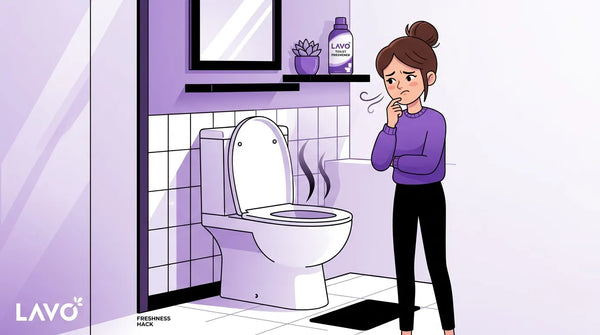
Air freshener works for maybe twenty minutes. Then the smell is back, and you're standing in your bathroom wondering if you're just imagining it, or if everyone who visits secretly notices too.
You're not imagining it. And it's not the candle's fault.
Bathroom odor comes from five specific, physical sources — and in almost every case, it's not the one people assume. Below is a five-minute test you can run right now, room by room, that will tell you exactly which one is yours.
Why this isn't a "clean more" problem
Here's the thing that trips people up: a clean-looking bathroom and a bad-smelling bathroom are almost unrelated. You can scrub the visible surfaces every single day and never touch the actual source, because none of the five real causes are on a surface you'd think to wipe.
Run through these in order. Most people find their answer in the first three.
Test 1: The wax ring at the toilet base (30 seconds)
Place a strip of tissue paper flat against the floor where the toilet meets the ground, all the way around the base. Flush, wait a minute, then check the tissue for moisture. Now gently rock the toilet side to side with your hand — if it shifts even slightly, that's your answer.
What it means: the wax ring sealing the toilet to the drain pipe has degraded or shifted. Sewer gas — sharp, sulfur-heavy, distinctly different from a "dirty" smell — is leaking in at floor level. This usually gets worse right after flushing.
Fix: a wax ring replacement is roughly a $15–20 part and a 1–2 hour job. No cleaning product touches this, because the leak isn't inside the bowl at all.
Test 2: Under the rim (1 minute)
Grab a small mirror and angle it up under the toilet rim, where the flush jets sit.
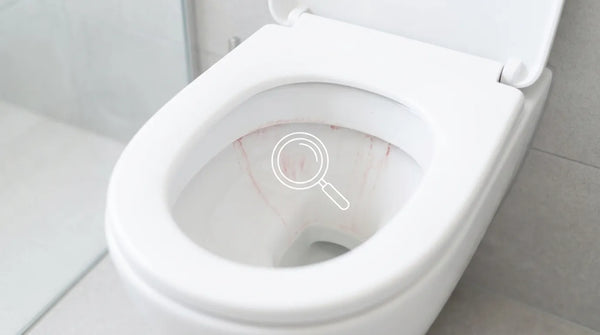
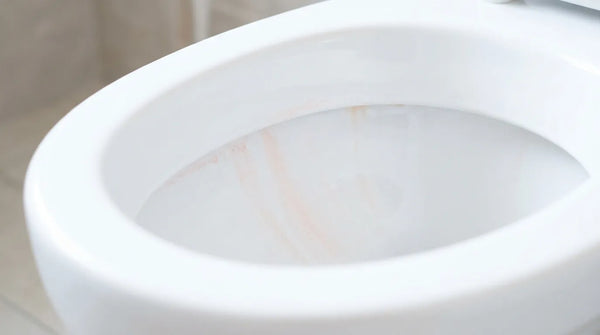
What it means: this spot is warm, dark, and permanently damp — ideal conditions for bacterial biofilm, a protective layer that shrugs off normal surface cleaning. Every flush aerosolizes a bit of it into the room. That's the quiet, constant background smell that returns within hours of cleaning, even when the bowl looks spotless.
Fix: a rim brush or angled cleaning tool, monthly. An automatic tank treatment with antibacterial action slows how fast this recolonizes between cleanings.
Test 3: Inside the tank (30 seconds)
Lift the tank lid. Look at the waterline inside.
What it means: if you see dark brown or black discoloration, that's mold, and it's been sitting in the water that fills your bowl on every single flush. The smell people blame on the bowl is frequently coming from water that started in the tank.
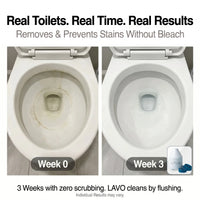
Fix: a citric acid pod in the tank continuously prevents this mold and mineral buildup, treating the water at the source instead of the bowl after the fact.
Test 4: The toilet brush holder (10 seconds)
Smell the brush holder directly, separate from the toilet itself.
What it means: toilet brush holders regularly rank among the most bacteria-dense objects tested in home hygiene studies — often worse than the seat. The holder collects dirty water after every use, sits warm, and grows bacteria between cleanings. You may be smelling the holder, not the toilet.
Fix: wash it monthly in hot water with an enzyme or citric acid solution, and replace the brush every six months. Switching to an automatic tank system that keeps the bowl clean removes most of the need for a brush at all.
Test 5: The trap, for rarely-used toilets (overnight test)
If this is a guest bathroom or a toilet that sits unused for days at a time, this is likely yours.
What it means: the S-shaped trap beneath the bowl holds a water seal that blocks sewer gas. Biofilm can build on its submerged interior surfaces, especially with infrequent flushing, and it's below the waterline where poured cleaners barely reach.
Fix: pour a cup of enzyme cleaner into the bowl and let it sit overnight, once a month for low-use toilets.
Why the candle isn't working
Air fresheners change the balance of odor molecules floating in the room. They don't touch any of the five sources above. That's the entire reason the smell comes back the second the scent fades — nothing underneath actually changed.
If you're reaching for a spray or candle specifically in the bathroom on a regular basis, one of these five is almost certainly active right now.
Quick recap
-
Tissue + rock test at the base → wax ring
-
Mirror under the rim → biofilm
-
Look inside the tank → mold in the water
-
Smell the brush holder directly → contaminated holder
-
Enzyme overnight test → trap biofilm (mainly low-use toilets)
Most bathrooms have one active cause, occasionally two. Once you know which one it is, the fix takes minutes, not a deep clean.
A citric acid tank pod won't fix a wax ring or a trap issue, but it directly addresses two of the five most common causes — tank mold and bacterial regrowth — continuously, with zero scrubbing. See how it works at here.