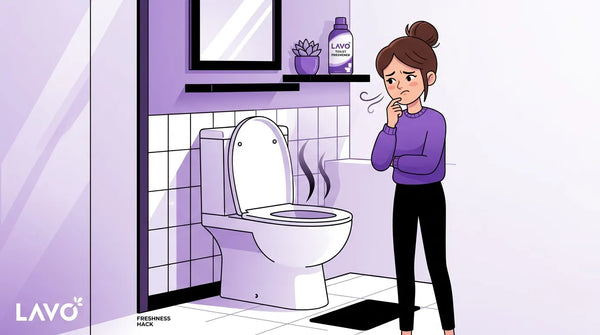

Quick Answer: The toilet ring forms because of minerals — primarily calcium and magnesium — dissolved in your tap water. Every flush deposits a microscopic layer onto your bowl. Scrubbing removes what's already there, but the next flush immediately starts building it up again. The only way to truly stop the ring is to treat the water before it hits the bowl.
The Real Reason Your Toilet Ring Keeps Coming Back
This is the part nobody tells you. The ring isn't a dirt problem — it's a water chemistry problem.
If you live in a hard water area (and roughly 85% of American households do), your tap water contains dissolved calcium carbonate and magnesium. When that water sits in or flows across your toilet bowl, those minerals don't stay dissolved. They precipitate out and bond to the porcelain surface as limescale.
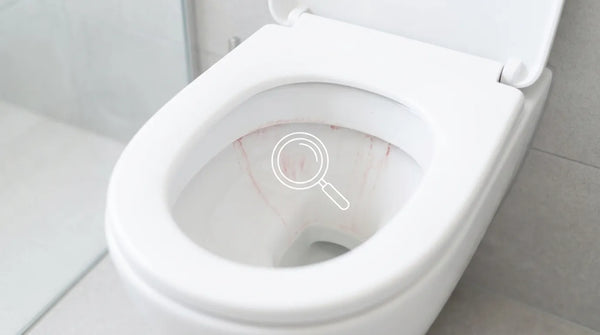
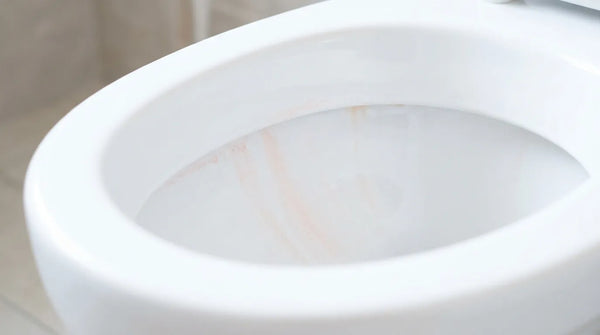
Every single flush deposits another microscopic layer. Over two or three days, those layers become visible as a yellow, brown, or orange ring — usually right at the waterline where deposits concentrate. You scrub it off on Monday. By Thursday, the next batch of layers is already there.
This is why the ring "grows back so fast." It never actually went away — you removed what was there, but you didn't change the water coming in.
Why Bleach and Gel Cleaners Don't Solve the Problem
Most toilet bowl cleaners you find at the grocery store are bleach-based. They work by bleaching the color of the limescale deposit — literally changing the pigment so it looks lighter. The calcium mineral itself stays right where it is.
Within days, new mineral layers deposit on top of the now-invisible old layer. The ring reappears. You clean again. You're trapped in a cleaning cycle that has no endpoint — and it's completely unnecessary.
Bleach is a disinfectant and a whitening agent. What it is not is an acid. Limescale is calcium carbonate, which is an alkaline mineral compound. The only chemistry that actually dissolves it is acid. Specifically, a weak organic acid like citric acid, acetic acid (vinegar), or lactic acid.
This is not opinion — it's basic chemistry. Acids react with alkaline compounds and break them down into water-soluble byproducts that flush away. Bleach does not do this. No bleach-based product dissolves limescale, regardless of how the marketing is worded.
The Method That Actually Stops the Ring From Forming
If the problem is mineral deposition with every flush, the solution is to neutralize or dissolve those minerals during the flush — before they can deposit on the porcelain. That means getting the right chemistry into your tank water continuously, not reactively.
This is the principle behind citric acid tank cleaners. A pod or tab containing citric acid sits inside your toilet tank (the cistern — the water box behind your toilet, not the bowl). Every time you flush, a tiny amount of citric acid dissolves into the flush water. Citric acid is slightly acidic, which means it continuously prevents calcium deposits from sticking to the porcelain surface.
The ring never forms because the conditions for it to form are constantly being disrupted. This is preventive chemistry, not reactive cleaning.
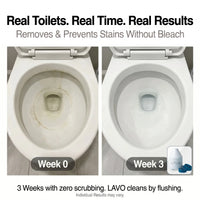
LAVO works on exactly this principle. A small reusable pod housing sits in your tank, and a citric acid tab inside it lasts approximately 30 days or 250 flushes. The water that enters your bowl with every flush already contains enough citric acid to prevent mineral adhesion. After the first few days of use, you'll notice the existing ring beginning to dissolve — within one to two weeks, it's typically gone completely.
The reusable pod means the ongoing cost is just replacement tabs — not a new plastic bottle every month.
Step-by-Step: How to Stop the Toilet Ring for Good
Step 1: Do one final scrub. If you have years of built-up deposits, give the bowl a thorough clean before you start. You're starting fresh.
Step 2: Lift the toilet tank lid. This is the rectangular box attached to the back of your toilet. Just lift it off — nothing is attached.
Step 3: Place the pod in the back corner. Away from the float valve and fill mechanism. It sits on the floor of the tank.
Step 4: Replace the lid and flush once. You'll see the bowl water turn a light blue-teal color. That's the citric acid activating.
Step 5: Stop scrubbing. Seriously. The ring won't come back. In about 5–10 days the existing deposits will fully dissolve and flush away.
Step 6: Swap the tab once a month. When the blue color fades from your bowl water, the tab is used up. Pull out the pod, drop in a fresh tab, put it back. Thirty seconds of work per month is now your entire toilet cleaning routine.
Common Mistakes That Make the Ring Worse
Using bleach tablets in the tank. These actually accelerate limescale buildup in many cases because they temporarily bleach deposits lighter, making you think they're gone, while the mineral layer continues to grow underneath. They also corrode rubber tank components over time.
Only cleaning the bowl and ignoring the tank. The source of your mineral problem is the water in the tank. Cleaning the bowl without addressing the incoming water is like mopping the floor while a faucet drips above you.
Cleaning too aggressively. Hard scrubbing doesn't remove more calcium than gentle scrubbing. What removes calcium is acid chemistry. Save your elbow.
Using gel dispensers that hang on the bowl rim. These apply cleaner to the bowl surface after the fact. They have no contact with tank water, so they do nothing to prevent the ring from forming — they just briefly coat the existing deposits.
Frequently Asked Questions
Why does my toilet get a ring even though I clean it every week? Because cleaning removes what's there, but doesn't change the water chemistry causing it to form. Hard water deposits with every flush regardless of how recently you cleaned.
What is the brown ring in my toilet made of? Primarily calcium carbonate (limescale) and sometimes iron compounds or manganese, depending on your local water supply. The color varies based on mineral composition. All are dissolved by acid chemistry.
Will vinegar remove a toilet ring? Vinegar (acetic acid) does dissolve limescale, but it evaporates quickly and requires direct contact time. It's a reasonable one-time solution but not practical for continuous prevention. Citric acid provides the same dissolving chemistry with a longer active life.
How do I know if I have hard water? If you have white scale around your faucets and showerheads, rings in your toilet, cloudy spots on glassware, or you notice your soap doesn't lather well — you have hard water. You can also buy inexpensive water hardness test strips online.
Does the ring come back after citric acid treatment? Not while the citric acid is present in your tank water. As long as there's an active tab in your pod, the preventive chemistry continues with every flush. The ring only returns if you stop the treatment.
Is citric acid safe for my toilet components? Yes. Citric acid is pH-safe for porcelain, rubber seals, plastic components, and metal fixtures. It's one of the gentlest descaling agents available — the same compound used in dishwasher rinse aids and kettle descalers.
Stop fighting the same ring every week. The toilet ring is a water problem, and the fix is in your tank, not your scrubbing arm. Click here to see what the LAVO Pod can do (and watch out for sales)!